
Puerto Rican cuisine is a vibrant tapestry woven from indigenous Taíno roots, Spanish colonial influences, African heritage, and even American touches. It’s a flavorful fusion that emphasizes bold seasonings, fresh ingredients, and dishes that evoke warmth and nostalgia. Comfort food in Puerto Rico often means hearty meals shared with family, especially during holidays or rainy days in the tropical climate. These recipes are soul-soothing, like a hug from abuela (grandmother), and they’re perfect for bringing a taste of the island to your kitchen. Whether you’re craving savory rice, crispy plantains, or creamy desserts, we’ve simplified traditional favorites to make them accessible for home cooks. No fancy equipment needed—just basic pantry staples and a bit of love.
In this article, we’ll explore seven classic Puerto Rican comfort foods, starting with the essential base: sofrito. We’ll provide easy-to-follow recipes, tips for variations, and ways to incorporate them into your meals. For more inspiration, check out our Latin American cuisine section on ForknFood.com. If you’re new to these flavors, start small and build from there. Let’s dive in!

The Foundation: Homemade Sofrito
Every great Puerto Rican dish begins with sofrito, a aromatic blend of herbs and vegetables that’s the heart of the cuisine. This versatile base adds depth to stews, rice, and beans without overwhelming the palate. Making it at home is simple and far superior to store-bought versions. It freezes well, so prepare a batch and use it throughout the week.
Ingredients (makes about 2 cups):
- 1 yellow or white onion, peeled and roughly chopped
- 2 cups mixed peppers (like cubanelle, aji dulce, or bell peppers), seeded and chopped
- 4 cloves garlic, peeled
- 1 cup culantro and/or cilantro (half and half, or all cilantro if culantro is unavailable)
Simplified Steps:
- Prep the ingredients: Roughly chop the onion, peppers, and herbs. No need for fine dicing— the food processor will handle it.
- Blend: Add everything to a food processor or blender. Pulse until you get a chunky paste, not a puree. Scrape down the sides as needed.
- Store: Use immediately, or portion into ice cube trays and freeze for up to 3 months. Thaw cubes as needed for recipes.
Tips: If you can’t find culantro (a stronger-flavored relative of cilantro), double up on cilantro. Add a splash of olive oil for smoother blending. Sofrito is key to authentic flavor—try it in our easy bean stew recipe. For more https://forknfood.com/ on Puerto Rican basics, visit this guide on essential seasonings.
Arroz con Gandules: The Iconic Rice Dish
No Puerto Rican gathering is complete without arroz con gandules, a festive rice pilaf studded with pigeon peas and infused with savory notes. It’s often served at holidays like Christmas, but it’s comforting enough for weeknights. This simplified version uses canned peas for convenience, cutting prep time while keeping the traditional taste.
Ingredients (serves 6):
- 1 tablespoon olive oil
- 1/3 cup diced country ham or bacon (optional for vegetarian: omit)
- 1/3 cup homemade sofrito
- 3 cups water or low-sodium chicken broth
- 1 1/2 teaspoons sazón con achiote y culantro (seasoning packet)
- 1 chicken bouillon cube
- 2 tablespoons tomato paste
- 1 teaspoon dried oregano
- 1/4 cup chopped fresh cilantro (optional)
- 2-3 bay leaves
- 2 tablespoons pimento-stuffed olives (optional)
- 1 (15-ounce) can pigeon peas, drained and rinsed
- 2 cups parboiled rice
Simplified Steps:
- Heat oil in a large pot over medium heat. Add ham (if using) and sofrito; cook for 4 minutes until fragrant.
- Stir in sazón, tomato paste, bouillon, oregano, bay leaves, cilantro, olives, peas, and water. Bring to a boil and taste—adjust seasoning.
- Add rice, stir to combine, and reduce heat to low. Cover and simmer for 20-25 minutes until rice is tender and liquid absorbed. Fluff with a fork.
Tips: Use parboiled rice to avoid mushiness. For a vegan twist, swap broth for vegetable stock and skip ham. Pair it with roasted chicken from our site. This dish reheats beautifully, making it ideal for meal prep.
Mofongo: Mashed Plantain Delight
Mofongo is the ultimate comfort side or main, made from fried green plantains mashed with garlic and pork cracklings. It’s hearty, garlicky, and often stuffed with shrimp or served with broth. Our simple recipe uses basic tools—no special masher required.
Ingredients (serves 4):
- 4 green plantains, peeled and cut into chunks
- 1/2 cup chicharrones (pork cracklings), crushed
- 4 cloves garlic, minced
- Salt to taste
- Vegetable oil for frying
- Optional: Chicken broth for moistening
Simplified Steps:
- Boil plantain chunks in salted water until soft, about 15 minutes. Drain.
- While boiling, fry chicharrones if not pre-crushed (or use store-bought).
- Mash plantains with garlic, chicharrones, and a splash of broth until smooth but chunky. Form into balls or use a cup to shape.
- Serve hot, perhaps topped with shrimp or alongside stew.
Tips: Green plantains are key—ripe ones turn sweet. For vegetarian, replace chicharrones with crispy bacon bits or omit. Explore variations in our plantain recipes collection. Learn more about its African roots here.
Tostones: Crispy Fried Plantains
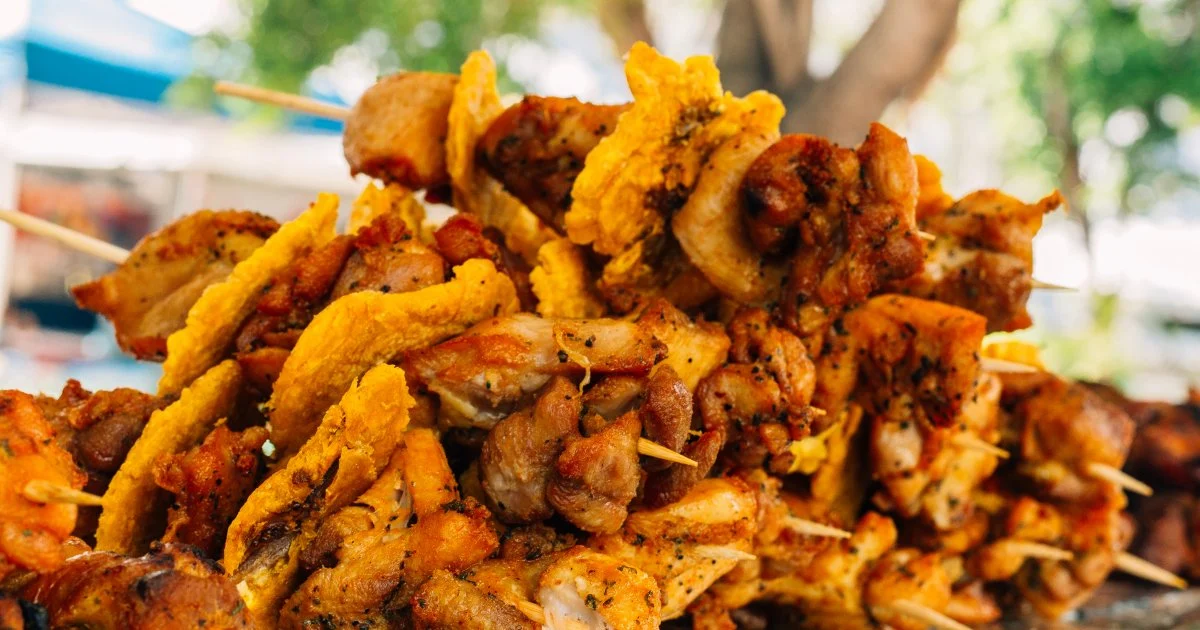
Tostones are twice-fried plantain slices that are crunchy outside, soft inside—a staple snack or side. They’re addictive and pair perfectly with garlic sauce or as a base for toppings.
Ingredients (serves 4):
- 3 green plantains
- Vegetable oil for frying
- Salt to taste
- Optional: Water for dipping
Simplified Steps:
- Peel plantains and slice into 1-inch rounds.
- Heat oil to 350°F. Fry slices for 3-4 minutes until soft but not brown. Remove and drain.
- Flatten each slice with a tostonera or bottom of a glass.
- Fry again for 2-3 minutes until golden and crispy. Sprinkle with salt.
Tips: Dip flattened slices in salted water for extra crispiness. Serve with mayo-ketchup dip (mix equal parts). For healthier options, bake after first fry. Check our appetizer ideas for more.
Pernil: Slow-Roasted Pork Shoulder
Pernil is the star of Puerto Rican celebrations—a juicy, crispy-skinned pork roast marinated overnight. This simplified method uses a smaller cut for easier cooking.
Ingredients (serves 6-8):
- 4-5 pound pork shoulder (bone-in for flavor)
- 6 cloves garlic, minced
- 2 tablespoons adobo seasoning
- 1 tablespoon fresh oregano, chopped (or dried)
- 1/4 cup olive oil
- Salt and pepper to taste
Simplified Steps:
- Mix garlic, adobo, oregano, oil, salt, and pepper into a paste. Rub all over pork, including under skin. Marinate overnight in fridge.
- Preheat oven to 300°F. Roast pork skin-side up for 4-5 hours, basting occasionally, until internal temp reaches 195°F.
- Increase heat to 450°F for 20 minutes to crisp skin.
- Rest 20 minutes, then shred or slice.
Tips: Low and slow is key for tenderness. Leftovers make great sandwiches. Pair with arroz con gandules. For sides, try our root vegetable medley.
Sancocho: Hearty Root Vegetable Stew
Sancocho is a thick, nourishing stew packed with meats, roots, and veggies—perfect for cold days or recovery meals. This version streamlines the long list of ingredients.
Ingredients (serves 8):
- 3 tablespoons olive oil
- 1 large onion, chopped
- 5 cloves garlic, chopped
- 1/4 teaspoon oregano
- Salt and white pepper to taste
- 1.5 pounds beef stew meat, cubed
- 2 quarts water
- 1/2 can (6.5 oz) tomato sauce
- 2 beef bouillon cubes
- Assorted veggies: 1 cup green beans, 2 carrots sliced, 1 chayote sliced, 1/2 head cabbage chopped, 1 green banana sliced, 1 yellow plantain sliced, 5 yautias quartered, 6 potatoes quartered, 1/2 cup pumpkin chopped, 2 ears corn cut into pieces, 1/3 cup green bell pepper chopped
- 1 can small white beans, drained
Simplified Steps:
- Heat oil in a large pot. Sauté onion, garlic, cilantro (if using), spices, and salt for 20 minutes until tender.
- Add beef; brown for 5-7 minutes.
- Pour in water, tomato sauce, and bouillon. Bring to simmer.
- Add veggies one by one, starting with harder ones like carrots and roots, simmering 2-3 hours until tender. Add water if needed.
Tips: Use what roots you have—substitute with turnips or sweet potatoes. For vegetarian, omit meat and use veggie broth. Serve with rice. More stew ideas on our soup page.
Tembleque: Coconut Pudding Dessert
End on a sweet note with tembleque, a jiggly coconut pudding dusted with cinnamon. It’s light yet comforting, like a tropical hug.
Ingredients (serves 6):
- 2 (14 oz) cans coconut milk
- 3/4 cup sugar
- 1/4 teaspoon kosher salt
- 1/2 cup cornstarch
- Ground cinnamon for garnish

Simplified Steps:
- In a saucepan, mix coconut milk, sugar, and salt. Reserve 3-4 tablespoons milk; stir cornstarch into it until dissolved, then add back.
- Bring to boil, stirring constantly until thick (about 5 minutes).
- Pour into molds or a dish. Cover with plastic wrap; refrigerate 3 hours or overnight.
- Unmold, sprinkle with cinnamon.
Tips: Use ramekins for individual servings. Add vanilla for extra flavor. For more desserts, visit our tropical sweets section.
Puerto Rican comfort food is more than recipes—it’s about connection and tradition. These simplified versions let you experience the island’s flavors without complexity. Experiment, share with loved ones, and explore more on ForknFood.com, like our Caribbean fusion ideas. Buen provecho!
Puerto Rican comfort food brings warmth, bold flavors, and a sense of home to any table. Building on the traditional recipes shared earlier—like sofrito, arroz con gandules, mofongo, tostones, pernil, sancocho, and tembleque—here are some Frequently Asked Questions (FAQs) to help you master these dishes. We’ve also included recommended products to stock your kitchen, making it easier to recreate authentic tastes at home.
FAQs About Puerto Rican Comfort Food
1. What is sofrito, and why is it so important in Puerto Rican cooking?
Sofrito is the aromatic base for most Puerto Rican dishes, made from blended onions, peppers, garlic, cilantro (or culantro), and sometimes tomatoes. It adds depth and that signature island flavor. Without it, dishes like arroz con gandules or sancocho lack authenticity. Homemade is best, but bottled versions work in a pinch.
2. Can I make Puerto Rican recipes if I can’t find certain ingredients like culantro or aji dulce peppers?
Yes! Substitutions are common. Use cilantro instead of culantro (it’s milder but similar). Replace aji dulce with cubanelle or bell peppers for sweetness without heat. For sofrito, a basic mix of onion, garlic, bell peppers, and cilantro gets you close. Many home cooks adapt based on availability.
3. What’s the difference between tostones and maduros?
Tostones are made from green (unripe) plantains—fried, flattened, and fried again for a crispy, savory result. Maduros use ripe (yellow-black) plantains, fried once for a sweet, caramelized side. Both are comfort staples, often served together.
4. How do I get the perfect crispy skin on pernil?
Marinate overnight with garlic, adobo, and oregano. Roast low and slow (around 300°F) until tender, then crank the heat to 450°F for the last 20-30 minutes to crisp the skin (called “cuerito”). Baste occasionally and let it rest before serving.
5. Is Puerto Rican food spicy?
Not typically—it’s flavorful from garlic, herbs, and seasonings like sazón, but rarely hot. Heat comes from optional additions like hot sauce or ají caballero peppers on the side.
6. Can these recipes be made vegetarian or vegan?
Absolutely. Omit meat in arroz con gandules (use vegetable broth) or sancocho (focus on roots and beans). For mofongo, skip chicharrones and use garlic with olive oil or broth. Tembleque is naturally vegan.
7. What’s a quick comfort meal using these basics?
Pair arroz con gandules with tostones and a side of beans. Or make mofongo stuffed with shrimp or veggies for a hearty dish. These come together in under an hour with prepped sofrito.
8. How do I store leftovers, and do they reheat well?
Most dishes like arroz con gandules, pernil, and sancocho taste even better the next day as flavors meld. Store in airtight containers in the fridge for 3-4 days. Reheat on the stove with a splash of water or broth to revive moisture. Mofongo and tostones are best fresh but can be reheated in an air fryer for crispiness.
9. What are some beginner-friendly Puerto Rican dishes?
Start with tostones (simple frying), arroz con gandules (one-pot), or tembleque (no-bake pudding). They use few ingredients and forgiving techniques.
10. Where can I learn more or find authentic variations?
Check resources like Discover Puerto Rico’s food guides or community forums for family twists. Experiment—Puerto Rican cooking is about feel and taste!
Recommended Products for Your Puerto Rican Kitchen
To make these recipes easier, stock up on essentials. Many are available on Amazon or in Latin grocery sections.
Key Ingredients:
- Goya or Loisa Sofrito/Recaito — The shortcut base for authentic flavor. (Look for frozen or jarred versions—no MSG options available.)
- Goya Sazón con Achiote — Adds that golden color and seasoning punch to rice and stews.
- Goya Adobo Seasoning — All-purpose rub for meats; skip salt and pepper.
- Goya Pigeon Peas (Gandules) — Canned for quick arroz con gandules.
- Plantains — Fresh green for tostones/mofongo; ripe for maduros.
Tools:
- Caldero (Aluminum Dutch Oven) — Essential for rice dishes and stews; even heat distribution. IMUSA or similar brands offer Boricua-themed ones.
- Pilón (Wooden Mortar and Pestle) — Perfect for mashing garlic or making mofongo. Wooden versions are traditional.
- Tostonera (Plantain Press) — Flattens fried plantains easily; wood or metal options.
- Box Grater (Guayo) — Grates yautía or plantains for fritters.
Cookbooks for Inspiration:
- “The Authentic Puerto Rican Cookbook” or “The Easy Puerto Rican Cookbook” — Great for beginners with step-by-step recipes and swaps.
- Healthy Rican spice bundles (salt-free adobo/sazón) for cleaner options.

These additions will elevate your cooking and bring more of Puerto Rico’s comfort to your home. For more recipes or variations, explore our Latin American cuisine section on ForknFood.com. Have questions about a specific dish? Drop them in the comments!
Leave a Reply