Welcome to Fork n Food, your go-to destination for easy, delicious recipes that celebrate wholesome ingredients and traditional cooking methods. Today, we’re diving into the world of fermented foods with a classic: homemade sauerkraut. If you’ve ever wondered how to transform a humble head of cabbage into a tangy, probiotic-rich condiment, this guide is for you. Sauerkraut, which literally means “sour cabbage” in German, is not just a side dish for bratwurst—it’s a versatile superfood that can elevate sandwiches, salads, and even smoothies.
Making sauerkraut at home is surprisingly simple, requiring just two main ingredients: cabbage and salt. The magic happens through lacto-fermentation, a natural process where beneficial bacteria convert the cabbage’s sugars into lactic acid, preserving the vegetable and creating that signature sour flavor. Unlike store-bought versions, which are often pasteurized and lack live probiotics, homemade sauerkraut is alive with gut-friendly microbes. Plus, it’s cost-effective and customizable—add spices, herbs, or other veggies to make it your own.

In this comprehensive guide, we’ll cover everything from the history and health benefits of sauerkraut to a step-by-step recipe, tips for beginners, and creative variations. Whether you’re new to fermentation or a seasoned pro, you’ll find valuable insights here. For more on fermented foods, check out our internal guide to kombucha brewing. And if you’re interested in the science behind it, explore external resources like the National Center for Home Food Preservation.
The History of Sauerkraut: From Ancient Origins to Modern Kitchens
Sauerkraut’s roots trace back thousands of years, far beyond its association with German cuisine. Believe it or not, fermented cabbage was first documented in China around 2,000 years ago during the construction of the Great Wall. Laborers preserved cabbage in rice wine to sustain themselves through harsh winters, creating an early form of what we now know as sauerkraut. This method of preservation was crucial in eras before refrigeration, allowing communities to store vegetables for months without spoilage.
As trade routes expanded, the practice spread to Europe. By the 16th century, sauerkraut had become a staple in Eastern European diets, particularly in Germany, Poland, and Russia. Sailors during the Age of Exploration, including Captain James Cook, relied on sauerkraut to prevent scurvy on long voyages due to its high vitamin C content. In fact, historical records show that Cook’s crew consumed barrels of sauerkraut, which helped them avoid the deadly disease that plagued many seafarers.
In the United States, sauerkraut gained popularity through German immigrants in the 19th century. It became a key ingredient in dishes like Reuben sandwiches and hot dogs. During World War I, however, anti-German sentiment led to a temporary rebranding as “liberty cabbage.” Today, sauerkraut is enjoying a renaissance in health-conscious circles, thanks to the growing interest in gut health and probiotic foods.
This historical evolution highlights sauerkraut’s enduring appeal as a simple yet effective preservation technique. For a deeper dive into food history, visit our https://forknfood.com/ article on ancient preservation methods. Externally, the Smithsonian Magazine offers fascinating insights into its global journey.
Health Benefits of Sauerkraut: Why Fermented Foods Matter
Beyond its tangy taste, sauerkraut packs a nutritional punch that makes it a worthy addition to any diet. As a fermented food, it’s loaded with probiotics—live bacteria that support digestive health. These microbes, primarily Lactobacillus strains, help balance the gut microbiome, potentially alleviating issues like bloating, IBS, and even improving mental health through the gut-brain axis.
One of the standout benefits is its vitamin content. A single cup of sauerkraut provides about 35% of your daily vitamin C needs, boosting immunity and collagen production. It’s also rich in vitamin K, essential for blood clotting and bone health, and contains fiber that aids digestion and promotes satiety. Studies suggest that regular consumption of fermented foods like sauerkraut can reduce inflammation, lower cholesterol, and even support weight management.
For those with dietary restrictions, sauerkraut is naturally low in calories (about 15 per half-cup serving), gluten-free, and vegan. Its fermentation process breaks down cabbage’s natural sugars, making it easier to digest than raw cabbage, which can cause gas for some people. Research from institutions like Harvard’s T.H. Chan School of Public Health links probiotic-rich diets to better overall health outcomes.
However, moderation is key—its high sodium content from the salting process means those on low-sodium diets should rinse it before eating. If you’re exploring more probiotic options, our kimchi recipe is a spicy alternative. For evidence-based info, check out Healthline’s article on sauerkraut benefits.
Ingredients and Equipment: What You’ll Need
Getting started with homemade sauerkraut doesn’t require fancy gadgets. Here’s a basic list:
- Ingredients:
- 1 medium head of green cabbage (about 2-3 pounds): Organic if possible for fewer pesticides.
- 1-2 tablespoons of sea salt or kosher salt (non-iodized to avoid inhibiting fermentation).
- Optional add-ins: Caraway seeds, juniper berries, garlic, or apples for flavor.
- Equipment:
- A large mixing bowl.
- A sharp knife or mandoline for shredding.
- Glass jars (quart-sized Mason jars work great).
- A weight (like a smaller jar filled with water) to keep cabbage submerged.
- Cheesecloth or a clean kitchen towel for covering.
Choose fresh, crisp cabbage for the best results—avoid wilted or damaged heads. Salt is crucial; it draws out moisture to create brine and inhibits bad bacteria. If you’re scaling up, remember the golden ratio: about 1.5-2% salt by cabbage weight.
For equipment tips, see our essential kitchen tools guide. Externally, Fermented Food Lab has great beginner resources.
Step-by-Step Recipe: Making Sauerkraut at Home
Now, the fun part—the recipe! This makes about 1 quart and takes 1-4 weeks to ferment, depending on your taste preference.
- Prepare the Cabbage: Remove outer leaves and rinse the head. Quarter it, remove the core, and thinly shred using a knife or food processor. Aim for uniform slices to ensure even fermentation.
- Salt and Massage: Place shredded cabbage in a bowl and sprinkle with salt. Let it sit for 5-10 minutes, then massage vigorously for 5-10 minutes until it releases liquid and becomes limp. This creates the brine.
- Pack the Jar: Transfer the cabbage and brine to a clean jar, packing it tightly to eliminate air pockets. Press down until the brine covers the cabbage by at least 1 inch. If needed, add a bit of filtered water.
- Weigh It Down: Place a weight on top to keep everything submerged. Cover with cheesecloth secured by a rubber band to allow gases to escape while keeping out contaminants.
- Ferment: Store at room temperature (65-75°F) away from direct sunlight. Check daily, pressing down if cabbage rises above the brine. Taste after 3-5 days; ferment longer for tangier results—up to 4 weeks.
- Store: Once fermented to your liking, seal with a lid and refrigerate. It lasts up to 6 months.
Safety note: If you see mold or smell off odors (not the normal sour scent), discard and start over. For visual guidance, here’s an image of the shredding process.
This process is hands-on but rewarding. Experiment with small batches first. For pairing ideas, try our Reuben sandwich recipe.
Tips for Success and Troubleshooting Common Issues
Fermentation can be tricky for beginners, but these tips will help:
- Use clean equipment to prevent contamination—sterilize jars with boiling water.
- Maintain the right temperature; too hot speeds up fermentation, potentially leading to mushy kraut, while too cold slows it down.
- Burp the jar daily to release CO2 and prevent explosions.
- If brine evaporates, top off with a saltwater solution (1 tsp salt per cup water).
Common problems: Pink or slimy kraut often means yeast overgrowth—ensure submersion. Soft texture? Too much heat or insufficient salt. Always use non-chlorinated water, as chlorine can kill good bacteria.
For more troubleshooting, our fermentation FAQ is handy. Externally, Cultures for Health offers expert advice.
Variations and Flavor Ideas: Customizing Your Sauerkraut
Once you’ve mastered basic sauerkraut, get creative! Add grated carrots and ginger for a zesty twist, or beets for vibrant pink “ruby kraut.” Incorporate spices like dill, mustard seeds, or chili flakes for heat. Purple cabbage creates a stunning visual effect and adds antioxidants.
Try “curtido,” a Latin American version with onions and oregano, perfect for pupusas. Or go Bavarian with apples and juniper berries. The possibilities are endless—fermentation is forgiving, so experiment boldly.
For inspiration, check our spiced pickle variations. Sites like Serious Eats have innovative recipes.
How to Use Your Homemade Sauerkraut
Sauerkraut isn’t just for hot dogs! Top salads for crunch, mix into coleslaw, or blend into dressings. It’s fantastic in soups, stir-fries, or as a probiotic boost in smoothies. Pair it with fatty meats to aid digestion, or enjoy straight from the jar.
Explore our sauerkraut-inspired meals for more ideas.
Conclusion: Embrace the Ferment
Homemade sauerkraut is more than a recipe—it’s a gateway to healthier eating and sustainable living. With minimal effort, you can create a nutrient-dense food that’s been cherished for centuries. Give it a try, and share your results in the comments below. Happy fermenting!
Homemade Sauerkraut Recipe: A Simple Fermented Food Guide
Welcome to Fork n Food, your go-to destination for easy, delicious recipes that celebrate wholesome ingredients and traditional cooking methods. Today, we’re diving into the world of fermented foods with a classic: homemade sauerkraut. If you’ve ever wondered how to transform a humble head of cabbage into a tangy, probiotic-rich condiment, this guide is for you. Sauerkraut, which literally means “sour cabbage” in German, is not just a side dish for bratwurst—it’s a versatile superfood that can elevate sandwiches, salads, and even smoothies.
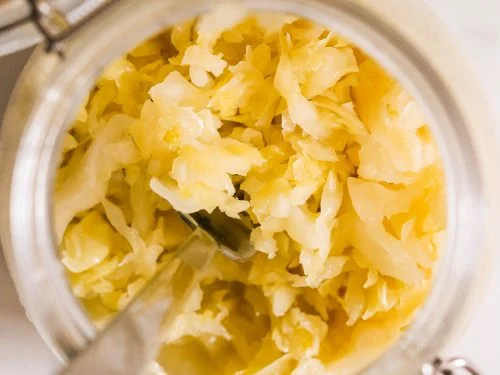
Making sauerkraut at home is surprisingly simple, requiring just two main ingredients: cabbage and salt. The magic happens through lacto-fermentation, a natural process where beneficial bacteria convert the cabbage’s sugars into lactic acid, preserving the vegetable and creating that signature sour flavor. Unlike store-bought versions, which are often pasteurized and lack live probiotics, homemade sauerkraut is alive with gut-friendly microbes. Plus, it’s cost-effective and customizable—add spices, herbs, or other veggies to make it your own.
In this comprehensive guide, we’ll cover everything from the history and health benefits of sauerkraut to a step-by-step recipe, tips for beginners, creative variations, frequently asked questions, recommended products, and more. Whether you’re new to fermentation or a seasoned pro, you’ll find valuable insights here. For more on fermented foods, check out our internal guide to kombucha brewing. And if you’re interested in the science behind it, explore external resources like the National Center for Home Food Preservation.
Let’s get started on this fermented journey!
The History of Sauerkraut: From Ancient Origins to Modern Kitchens
Sauerkraut’s roots trace back thousands of years, far beyond its association with German cuisine. Believe it or not, fermented cabbage was first documented in China around 2,000 years ago during the construction of the Great Wall. Laborers preserved cabbage in rice wine to sustain themselves through harsh winters, creating an early form of what we now know as sauerkraut. This method of preservation was crucial in eras before refrigeration, allowing communities to store vegetables for months without spoilage.
As trade routes expanded, the practice spread to Europe. By the 16th century, sauerkraut had become a staple in Eastern European diets, particularly in Germany, Poland, and Russia. Sailors during the Age of Exploration, including Captain James Cook, relied on sauerkraut to prevent scurvy on long voyages due to its high vitamin C content. In fact, historical records show that Cook’s crew consumed barrels of sauerkraut, which helped them avoid the deadly disease that plagued many seafarers.
In the United States, sauerkraut gained popularity through German immigrants in the 19th century. It became a key ingredient in dishes like Reuben sandwiches and hot dogs. During World War I, however, anti-German sentiment led to a temporary rebranding as “liberty cabbage.” Today, sauerkraut is enjoying a renaissance in health-conscious circles, thanks to the growing interest in gut health and probiotic foods.
This historical evolution highlights sauerkraut’s enduring appeal as a simple yet effective preservation technique. For a deeper dive into food history, visit our article on ancient preservation methods. Externally, the Smithsonian Magazine offers fascinating insights into its global journey.
Health Benefits of Sauerkraut: Why Fermented Foods Matter
Beyond its tangy taste, sauerkraut packs a nutritional punch that makes it a worthy addition to any diet. As a fermented food, it’s loaded with probiotics—live bacteria that support digestive health. These microbes, primarily Lactobacillus strains, help balance the gut microbiome, potentially alleviating issues like bloating, IBS, and even improving mental health through the gut-brain axis.
One of the standout benefits is its vitamin content. A single cup of sauerkraut provides about 35% of your daily vitamin C needs, boosting immunity and collagen production. It’s also rich in vitamin K, essential for blood clotting and bone health, and contains fiber that aids digestion and promotes satiety. Studies suggest that regular consumption of fermented foods like sauerkraut can reduce inflammation, lower cholesterol, and even support weight management.
For those with dietary restrictions, sauerkraut is naturally low in calories (about 15 per half-cup serving), gluten-free, and vegan. Its fermentation process breaks down cabbage’s natural sugars, making it easier to digest than raw cabbage, which can cause gas for some people. Research from institutions like Harvard’s T.H. Chan School of Public Health links probiotic-rich diets to better overall health outcomes.
However, moderation is key—its high sodium content from the salting process means those on low-sodium diets should rinse it before eating. If you’re exploring more probiotic options, our kimchi recipe is a spicy alternative. For evidence-based info, check out Healthline’s article on sauerkraut benefits.
Ingredients and Equipment: What You’ll Need
Getting started with homemade sauerkraut doesn’t require fancy gadgets. Here’s a basic list:
- Ingredients:
- 1 medium head of green cabbage (about 2-3 pounds): Organic if possible for fewer pesticides.
- 1-2 tablespoons of sea salt or kosher salt (non-iodized to avoid inhibiting fermentation).
- Optional add-ins: Caraway seeds, juniper berries, garlic, or apples for flavor.
- Equipment:
- A large mixing bowl.
- A sharp knife or mandoline for shredding.
- Glass jars (quart-sized Mason jars work great).
- A weight (like a smaller jar filled with water) to keep cabbage submerged.
- Cheesecloth or a clean kitchen towel for covering.
Choose fresh, crisp cabbage for the best results—avoid wilted or damaged heads. Salt is crucial; it draws out moisture to create brine and inhibits bad bacteria. If you’re scaling up, remember the golden ratio: about 1.5-2% salt by cabbage weight.
For equipment tips, see our essential kitchen tools guide. Externally, Fermented Food Lab has great beginner resources.
Step-by-Step Recipe: Making Sauerkraut at Home
Now, the fun part—the recipe! This makes about 1 quart and takes 1-4 weeks to ferment, depending on your taste preference.
- Prepare the Cabbage: Remove outer leaves and rinse the head. Quarter it, remove the core, and thinly shred using a knife or food processor. Aim for uniform slices to ensure even fermentation.
- Salt and Massage: Place shredded cabbage in a bowl and sprinkle with salt. Let it sit for 5-10 minutes, then massage vigorously for 5-10 minutes until it releases liquid and becomes limp. This creates the brine.
- Pack the Jar: Transfer the cabbage and brine to a clean jar, packing it tightly to eliminate air pockets. Press down until the brine covers the cabbage by at least 1 inch. If needed, add a bit of filtered water.
- Weigh It Down: Place a weight on top to keep everything submerged. Cover with cheesecloth secured by a rubber band to allow gases to escape while keeping out contaminants.
- Ferment: Store at room temperature (65-75°F) away from direct sunlight. Check daily, pressing down if cabbage rises above the brine. Taste after 3-5 days; ferment longer for tangier results—up to 4 weeks.
- Store: Once fermented to your liking, seal with a lid and refrigerate. It lasts up to 6 months.
Safety note: If you see mold or smell off odors (not the normal sour scent), discard and start over. For visual guidance, here’s an image of the shredding process.
This process is hands-on but rewarding. Experiment with small batches first. For pairing ideas, try our Reuben sandwich recipe.
Tips for Success and Troubleshooting Common Issues
Fermentation can be tricky for beginners, but these tips will help:
- Use clean equipment to prevent contamination—sterilize jars with boiling water.
- Maintain the right temperature; too hot speeds up fermentation, potentially leading to mushy kraut, while too cold slows it down.
- Burp the jar daily to release CO2 and prevent explosions.
- If brine evaporates, top off with a saltwater solution (1 tsp salt per cup water).
Common problems: Pink or slimy kraut often means yeast overgrowth—ensure submersion. Soft texture? Too much heat or insufficient salt. Always use non-chlorinated water, as chlorine can kill good bacteria.
For more troubleshooting, our fermentation FAQ is handy. Externally, Cultures for Health offers expert advice.
Variations and Flavor Ideas: Customizing Your Sauerkraut
Once you’ve mastered basic sauerkraut, get creative! Add grated carrots and ginger for a zesty twist, or beets for vibrant pink “ruby kraut.” Incorporate spices like dill, mustard seeds, or chili flakes for heat. Purple cabbage creates a stunning visual effect and adds antioxidants.
Try “curtido,” a Latin American version with onions and oregano, perfect for pupusas. Or go Bavarian with apples and juniper berries. The possibilities are endless—fermentation is forgiving, so experiment boldly.
For inspiration, check our spiced pickle variations. Sites like Serious Eats have innovative recipes.
How to Use Your Homemade Sauerkraut
Sauerkraut isn’t just for hot dogs! Top salads for crunch, mix into coleslaw, or blend into dressings. It’s fantastic in soups, stir-fries, or as a probiotic boost in smoothies. Pair it with fatty meats to aid digestion, or enjoy straight from the jar.
Explore our sauerkraut-inspired meals for more ideas.
Frequently Asked Questions (FAQs) About Homemade Sauerkraut
Here are answers to some of the most common questions beginners ask:
Q: How much salt do I really need?
A: Aim for 1.5–2% salt by weight of the cabbage (about 1 tablespoon of kosher salt per pound). Too little can lead to spoilage; too much makes it overly salty.
Q: My sauerkraut is mushy or soft—what went wrong?
A: This usually happens from fermenting at too high a temperature (>75°F), uneven salting, or air pockets. It’s safe if it smells clean and sour, but texture suffers. Next time, ferment cooler and pack tightly.
Q: Is mold on top safe to remove, or should I throw it out?
A: Fuzzy, colored mold (green, black, blue) means discard the batch—it’s contaminated. White film (kahm yeast) is common and harmless; skim it off and continue.
Q: Why is my kraut pink or dark?
A: Pink often signals yeast exposure or oxidation; dark can come from uneven salting, impurities, or high heat. Prevent by using clean tools and proper submersion.
Q: Can I use red cabbage or add other veggies?
A: Yes! Red cabbage makes beautiful pink kraut with the same taste. Add carrots, beets, or garlic freely—just keep the salt ratio consistent.
Q: How long does fermentation take, and when is it ready?
A: Taste after 3–5 days; it’s ready when tangy enough for you (often 1–4 weeks). Warmer temps speed it up.
Q: Is it safe if it smells strong or “off”?
A: Normal sauerkraut smells sour and funky. If it’s rotten, putrid, or yeasty in a bad way, toss it.
For more in-depth troubleshooting, check resources like MakeSauerkraut.com FAQs.
Recommended Products & Tools for Homemade Sauerkraut
To make the process easier and more reliable, consider these popular, highly recommended items:
- Fermentation Crocks: Ohio Stoneware or Humble House Sauerkrock ceramic crocks (1–5 gallons) with built-in water seals and weights—ideal for larger batches and even fermentation.
- Mason Jar Fermentation Kits: Easy Fermenter or Pickle Helix kits with airlocks and glass weights—perfect for beginners using wide-mouth quart jars.
- Fermentation Weights: Premium glass weights (like Pickle Pebbles or Nourished Essentials sets) to keep cabbage submerged and prevent mold.
- Digital Scale: MyWeigh KD-8000 or similar—for precise 2% salt measurements.
- Mandoline or Kraut Cutter: For uniform shredding without a food processor.
- Airlock Lids: Jillmo or similar kits to manage gases automatically.
These tools are available on sites like Amazon, Lehman’s, or Cultures for Health. Start simple with jars if you’re new, then upgrade to a crock for bigger ferments.

Conclusion: Embrace the Ferment
Homemade sauerkraut is more than a recipe—it’s a gateway to healthier eating and sustainable living. With minimal effort, you can create a nutrient-dense food that’s been cherished for centuries. Give it a try, and share your results in the comments below. Happy fermenting!



Leave a Reply