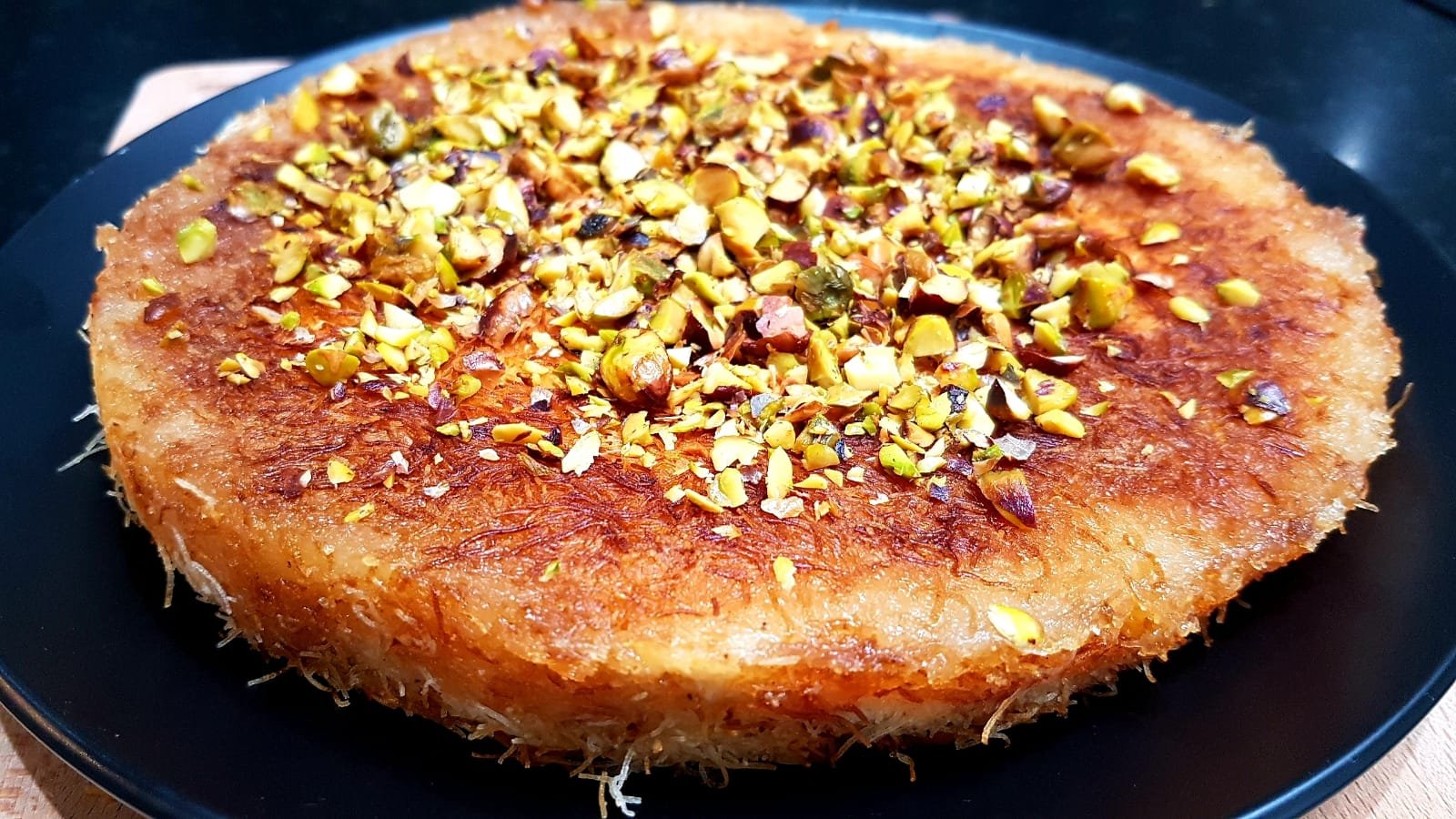
Imagine biting into a dessert that perfectly balances crispy, golden strands of pastry with a gooey, stretchy cheese center, all drenched in a fragrant syrup that sings of rose and orange blossoms. That’s the magic of Lebanese kanafeh (also spelled knafeh or kunafa), a beloved Middle Eastern treat that’s as indulgent as it is iconic. This crispy and cheesy delight has captured hearts across the globe, from bustling street vendors in Beirut to home kitchens worldwide. For food enthusiasts, it’s not just a dessert—it’s a cultural experience wrapped in layers of history and flavor.
Kanafeh’s origins are shrouded in a bit of mystery, with various regions claiming its invention. Many trace it back to the 10th century in the Middle East, possibly emerging during the Umayyad Caliphate in Damascus, Syria, or the Fatimid era in Egypt. Legend has it that it was created to satisfy the hunger pangs of caliphs during Ramadan, providing a sweet, energy-packed bite after long days of fasting. While Palestine’s Nablus is often credited with perfecting the Nabulsi-style kanafeh using local cheese, the Lebanese version shines with its emphasis on crispiness and cheesiness. In Lebanon, it’s commonly enjoyed as Knafeh Na’ameh (meaning “fine” or “smooth”), but the shredded phyllo (kataifi) variant we’re focusing on here delivers that signature crunch.
What makes Lebanese kanafeh stand out? It’s the harmonious blend of textures and tastes: the buttery, toasted kataifi dough contrasts beautifully with the mild, melty cheese, while the syrup adds a floral sweetness that’s not overpowering. This recipe is tailored for home cooks, using accessible ingredients like mozzarella for that authentic pull. Whether you’re hosting a dinner party or craving a taste of the Levant, making kanafeh at home is surprisingly straightforward—and incredibly rewarding.
In Lebanese cuisine, sweets like this are staples at celebrations, family gatherings, and even breakfast tables. If you’re exploring more Middle Eastern flavors, check out our internal guide https://forknfood.com/ to Lebanese Desserts or try our Baklava Recipe for another phyllo-based wonder. Externally, for more on the dessert’s rich history, visit Wikipedia’s page on Knafeh.
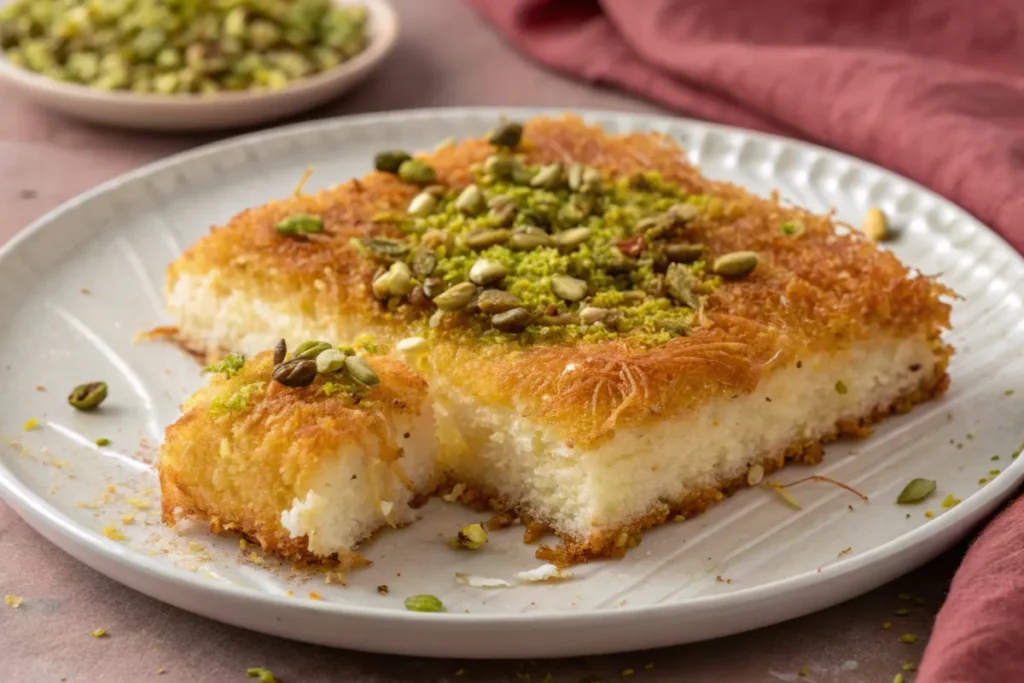
As we dive into this homemade version, remember that authenticity comes from fresh ingredients and a touch of patience. This recipe serves 8-10 people and takes about 1 hour from start to finish, including baking time. Let’s get started!
Ingredients for Homemade Lebanese Kanafeh
To achieve that perfect crispy exterior and cheesy interior, you’ll need high-quality components. This recipe uses a mix of mozzarella and ricotta for a creamy, less salty filling—traditional Lebanese versions often use Akkawi cheese, but mozzarella is a great substitute available everywhere.
For the Pastry:
- 500g kataifi dough (shredded phyllo, available frozen in Middle Eastern stores or online)
- 200g unsalted butter, melted (or ghee for a richer flavor)
- Optional: A pinch of orange food coloring for that traditional vibrant hue
For the Cheese Filling:
- 400g mozzarella cheese, shredded (low-moisture works best for stretchiness)
- 200g ricotta cheese (for creaminess)
- 1 tablespoon sugar (to lightly sweeten the filling)
- 1 teaspoon rose water (optional, for aroma)
For the Syrup (Attar):
- 2 cups granulated sugar
- 1 cup water
- 1 teaspoon lemon juice
- 1 teaspoon rose water
- 1 teaspoon orange blossom water
For Garnish:
- 1/2 cup crushed pistachios
- Optional: Dried rose petals for an elegant touch
These quantities yield a 9-10 inch round pan of kanafeh. If you’re sourcing ingredients, check out specialty sites like Amazon for kataifi dough or your local Middle Eastern market.
Step-by-Step Instructions
Making kanafeh at home might seem intimidating, but breaking it down into steps makes it approachable. We’ll bake this version for even crispiness, though traditional methods often involve stovetop cooking.
Step 1: Prepare the Syrup
Start with the syrup, as it needs time to cool. In a small saucepan, combine 2 cups sugar, 1 cup water, and 1 teaspoon lemon juice. Bring to a boil over medium heat, stirring until the sugar dissolves. Reduce to a simmer for 5-7 minutes until slightly thickened—aim for a light syrup consistency, not too viscous. Remove from heat and stir in 1 teaspoon rose water and 1 teaspoon orange blossom water. Set aside to cool completely. This floral syrup is the soul of kanafeh, infusing every bite with subtle perfume.
Step 2: Prep the Kataifi Dough
Thaw the kataifi dough if frozen—let it sit at room temperature for about an hour. Once pliable, gently pull apart the strands to loosen them. Using your hands or a food processor, shred into 1-2 inch pieces for even distribution. Pour the melted butter over the shredded dough and mix thoroughly, ensuring every strand is coated. This step is crucial for that crispy texture; uncoated parts will burn or stay soggy. If using food coloring, mix a pinch into the butter first for an orange tint.
Step 3: Prepare the Cheese Filling
In a bowl, combine the shredded mozzarella and ricotta. Add 1 tablespoon sugar and 1 teaspoon rose water, mixing well. If your mozzarella is salty, rinse it under cold water or soak for 30 minutes to desalt—traditional Akkawi requires this, but store-bought mozzarella often doesn’t. The goal is a mild, creamy filling that melts beautifully without overpowering the sweetness.
Step 4: Assemble the Kanafeh
Preheat your oven to 375°F (190°C). Grease a 9-10 inch round baking pan (or cast-iron skillet for authenticity) with butter. Spread half the buttered kataifi evenly across the bottom, pressing firmly with the back of a measuring cup to form a compact base—push some up the sides to encase the cheese. Layer the cheese mixture evenly over this, leaving a small border to prevent overflow. Top with the remaining kataifi, pressing down again for a flat surface. Brush the top with any leftover butter.
Step 5: Bake to Perfection
Bake in the preheated oven for 25-30 minutes, or until the top is golden and crispy. For extra crunch, broil for 1-2 minutes, watching closely to avoid burning. Remove from the oven and let it rest for 2 minutes.
Step 6: Syrup and Garnish
While hot, pour the cooled syrup evenly over the kanafeh—it should sizzle and absorb quickly. Allow it to soak for 5-10 minutes. Flip onto a serving platter (place the platter over the pan and invert quickly). Sprinkle with crushed pistachios and rose petals. Serve warm for the ultimate cheese pull!
This process yields a kanafeh that’s crispy on the outside, cheesy in the middle, and perfectly sweetened. For visual inspiration, see this detailed guide from Maureen Abood’s Lebanese recipe.
Tips for Making the Perfect Kanafeh at Home
Achieving restaurant-quality kanafeh requires a few pro tips:
- Butter is Key: Use ghee instead of butter for a nuttier flavor and higher smoke point—it prevents burning during baking.
- Press Firmly: Compact the layers to avoid air pockets, ensuring even cooking and a sturdy structure.
- Syrup Temperature: Always pour cold syrup on hot pastry for maximum crispiness; hot syrup can make it soggy.
- Cheese Selection: Opt for fresh, low-moisture mozzarella to mimic Akkawi’s texture. If using salted cheese, desalt thoroughly.
- Make Ahead: Prepare syrup and cheese filling up to 2 days in advance; assemble and bake fresh for best results.
- Oven vs. Stove: For beginners, baking is foolproof, but advanced cooks can try stovetop for authentic char.
These tweaks will elevate your kanafeh from good to unforgettable.
Variations on Traditional Lebanese Kanafeh
While the classic crispy cheesy version is a staple, Lebanese kanafeh lends itself to creative twists. For Knafeh Na’ameh, swap kataifi for a semolina-based dough mixed with milk for a smoother, cake-like texture—ideal if you prefer less crunch. Add a layer of ashta (clotted cream) or nuts like pine nuts for extra richness, a nod to Syrian influences.
For a modern spin, incorporate mango or chocolate into the filling for fusion flavors. If you’re dairy-free, experiment with plant-based cheeses, though the stretch won’t be the same. Explore our internal Middle Eastern Variations for more ideas, or check Urban Farm and Kitchen’s take.
Serving Suggestions and Nutritional Notes
Serve kanafeh warm with Arabic coffee or mint tea to cut the sweetness. It’s perfect for iftar during Ramadan or as a showstopper at parties. Pair it with fresh fruits like oranges for contrast.
Nutritionally, a slice (about 150g) packs around 400 calories, mostly from carbs and fats—indulge mindfully! It’s rich in calcium from the cheese but high in sugar.
Conclusion: Bring Lebanon to Your Table
Homemade Lebanese kanafeh is more than a recipe—it’s a gateway to Middle Eastern heritage. With its crispy layers, cheesy heart, and syrupy finish, it’s sure to impress. Experiment, share, and savor the process. For more recipes, visit Fork n Food’s Lebanese Section. Happy baking!
Imagine biting into a dessert that perfectly balances crispy, golden strands of pastry with a gooey, stretchy cheese center, all drenched in a fragrant syrup that sings of rose and orange blossoms. That’s the magic of Lebanese kanafeh (also spelled knafeh or kunafa), a beloved Middle Eastern treat that’s as indulgent as it is iconic. This crispy and cheesy delight has captured hearts across the globe, from bustling street vendors in Beirut to home kitchens worldwide. For food enthusiasts, it’s not just a dessert—it’s a cultural experience wrapped in layers of history and flavor.
Kanafeh’s origins trace back to the 10th century in the Middle East, with influences from Syria, Egypt, and Palestine. In Lebanon, it’s cherished for its emphasis on crisp kataifi (shredded phyllo) and melty cheese. Whether for Ramadan, Eid, or everyday indulgence, this homemade version brings authentic flavors to your table.
For more Middle Eastern sweets, explore our internal guides like Lebanese Desserts or Baklava Recipe. Externally, dive deeper into its history on Wikipedia’s Knafeh page.
This recipe serves 8-10 and takes about 1 hour. Let’s bake!
Ingredients for Homemade Lebanese Kanafeh
For the Pastry:
- 500g kataifi dough (shredded phyllo, frozen or fresh)
- 200g unsalted butter or ghee, melted
- Optional: Pinch of orange food coloring
For the Cheese Filling:
- 400g mozzarella cheese, shredded (low-moisture preferred)
- 200g ricotta cheese
- 1 tbsp sugar
- 1 tsp rose water (optional)
For the Syrup (Attar):
- 2 cups granulated sugar
- 1 cup water
- 1 tsp lemon juice
- 1 tsp rose water
- 1 tsp orange blossom water
Garnish:
- ½ cup crushed pistachios
- Dried rose petals (optional)
Step-by-Step Instructions
- Prepare the Syrup: Boil sugar, water, and lemon juice; simmer 5-7 minutes. Add rose and orange blossom waters off heat. Cool completely.
- Prep Kataifi: Thaw dough, shred strands, mix thoroughly with melted butter (and coloring if using).
- Cheese Filling: Mix mozzarella, ricotta, sugar, and rose water. Desalt mozzarella if needed by soaking/rinsing.
- Assemble: Preheat oven to 375°F (190°C). Grease a 9-10 inch pan. Press half the kataifi as base (up sides), add cheese (leave border), top with remaining kataifi, press firm, brush with butter.
- Bake: 25-30 minutes until golden. Broil 1-2 minutes if needed for extra crisp.
- Syrup & Serve: Pour cold syrup over hot kanafeh. Rest, flip, garnish with pistachios. Serve warm!
Tips for the Perfect Kanafeh
- Use ghee for nuttier flavor and better crisp.
- Press layers firmly—no air pockets!
- Cold syrup on hot pastry = maximum crunch.
- Desalt cheese for balanced taste.
- Bake instead of stovetop for even results.
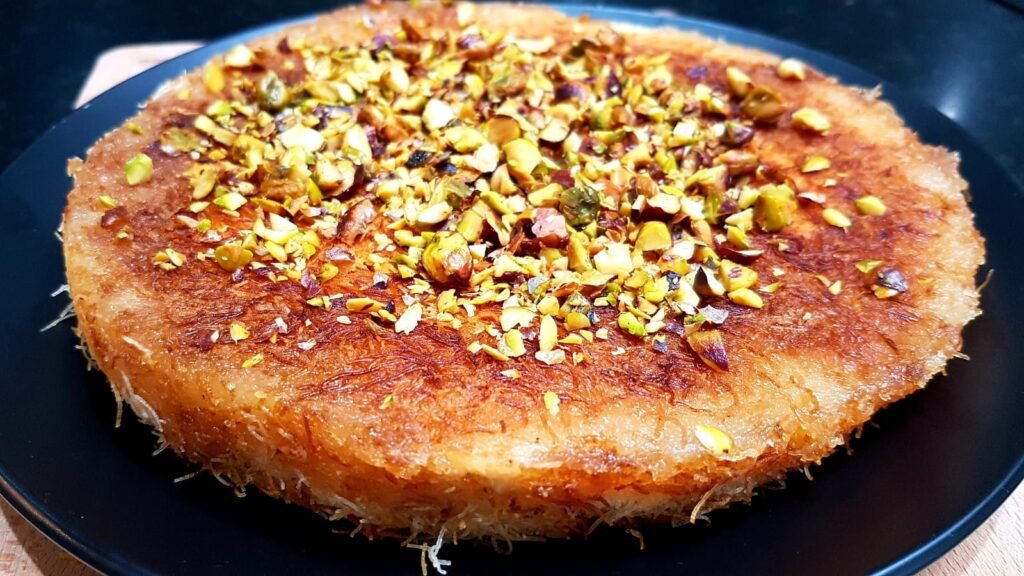
Variations
Try Knafeh Na’ameh (semolina-based, smoother) or add ashta cream. For fusion, experiment with nuts or fruits.
Serving Suggestions
Pair with Arabic coffee or mint tea. Ideal for celebrations or Ramadan iftar.
Frequently Asked Questions (FAQs)
Q: Can I make kanafeh without kataifi dough?
A: Traditional crispy Lebanese kanafeh relies on kataifi for texture. Substitutes like vermicelli won’t give the same crunch—avoid them. For a smoother version (Knafeh Na’ameh), use semolina dough instead.
Q: What if I can’t find Akkawi cheese?
A: Mozzarella (low-moisture) is the best substitute for its stretchy, mild flavor. Ricotta adds creaminess. If mozzarella is salty, soak it in water for 30 minutes to 2 hours, changing water a few times.
Q: Why is my kanafeh soggy instead of crispy?
A: Common mistakes include too much butter (stick to measurements), hot syrup on hot pastry (use cold syrup), or under-pressing layers. Also, ensure even butter coating and don’t over-soak in syrup.
Q: Do I bake or cook on the stovetop?
A: Baking is easier and more foolproof for home cooks, giving even crispiness. Traditional stovetop methods offer char but require flipping and close watching to avoid burning.
Q: How do I store leftovers?
A: Refrigerate up to 3-4 days. Reheat in a low oven (300°F/150°C) for 10 minutes to restore some crispiness. It stays crunchy longer in the fridge than at room temperature.
Q: Is kanafeh best served hot or cold?
A: Warm is ideal—the cheese pulls beautifully and the crisp contrasts with gooey filling. Room temperature works, but avoid cold from the fridge without reheating.
Q: Can I make it ahead?
A: Yes—prepare syrup and filling 1-2 days ahead. Assemble and bake fresh for best texture.
Where to Get Ingredients (Especially in Pakistan)
Since many readers may be in Pakistan (like Karachi), sourcing authentic ingredients is key:
- Kataifi/Kunafa Dough: Widely available frozen or fresh. Check online platforms like Daraz.pk (search “kunafa dough” or “kataifi”), Chefiality.pk, Bakehouse.pk, or Tadka.pk for nationwide delivery. Local suppliers like Kunafaty or The Arabian Foods deliver across Pakistan (contact via Instagram/Facebook at numbers like 0333-4242717 or 0335-8612604). In Karachi, look at specialty Middle Eastern stores in Clifton, DHA, or Saddar.
- Cheese: Mozzarella is easy—find low-moisture blocks at major supermarkets (Imtiaz, Chase, Naheed) or Metro. For closer-to-traditional Akkawi, some gourmet shops import it occasionally.
- Rose/Orange Blossom Water & Pistachios: Available at local spice shops, Bin Dawood/Imtiaz supermarkets, or online on Daraz. Ghee is everywhere.
- Other Specialty Items: For ready mixes or fillings (e.g., pistachio kunafa mix), check Bakerssupplies.pk or Ubuy Pakistan for imported options.
With these accessible sources, making kanafeh at home in Pakistan is straightforward!
Conclusion
Homemade Lebanese kanafeh is a rewarding project that brings joy and tradition to your kitchen. Crispy, cheesy, and syrup-soaked—it’s unforgettable. Try it soon and share your results!
For more, visit Fork n Food’s Lebanese Section. Happy cooking!
Ingredients for Homemade Lebanese Kanafeh
For the Pastry:
- 500g kataifi dough (shredded phyllo, frozen or fresh)
- 200g unsalted butter or ghee, melted
- Optional: Pinch of orange food coloring
For the Cheese Filling:
- 400g mozzarella cheese, shredded (low-moisture preferred)
- 200g ricotta cheese
- 1 tbsp sugar
- 1 tsp rose water (optional)
For the Syrup (Attar):
- 2 cups granulated sugar
- 1 cup water
- 1 tsp lemon juice
- 1 tsp rose water
- 1 tsp orange blossom water
Garnish:
- ½ cup crushed pistachios
- Dried rose petals (optional)
Step-by-Step Instructions
- Prepare the Syrup: Boil sugar, water, and lemon juice; simmer 5-7 minutes. Add rose and orange blossom waters off heat. Cool completely.
- Prep Kataifi: Thaw dough, shred strands, mix thoroughly with melted butter (and coloring if using).
- Cheese Filling: Mix mozzarella, ricotta, sugar, and rose water. Desalt mozzarella if needed by soaking/rinsing.
- Assemble: Preheat oven to 375°F (190°C). Grease a 9-10 inch pan. Press half the kataifi as base (up sides), add cheese (leave border), top with remaining kataifi, press firm, brush with butter.
- Bake: 25-30 minutes until golden. Broil 1-2 minutes if needed for extra crisp.
- Syrup & Serve: Pour cold syrup over hot kanafeh. Rest, flip, garnish with pistachios. Serve warm!
Tips for the Perfect Kanafeh
- Use ghee for nuttier flavor and better crisp.
- Press layers firmly—no air pockets!
- Cold syrup on hot pastry = maximum crunch.
- Desalt cheese for balanced taste.
- Bake instead of stovetop for even results.
Variations
Try Knafeh Na’ameh (semolina-based, smoother) or add ashta cream. For fusion, experiment with nuts or fruits.
Serving Suggestions
Pair with Arabic coffee or mint tea. Ideal for celebrations or Ramadan iftar.
Frequently Asked Questions (FAQs)
Q: Can I make kanafeh without kataifi dough?
A: Traditional crispy Lebanese kanafeh relies on kataifi for texture. Substitutes like vermicelli won’t give the same crunch—avoid them. For a smoother version (Knafeh Na’ameh), use semolina dough instead.
Q: What if I can’t find Akkawi cheese?
A: Mozzarella (low-moisture) is the best substitute for its stretchy, mild flavor. Ricotta adds creaminess. If mozzarella is salty, soak it in water for 30 minutes to 2 hours, changing water a few times.
Q: Why is my kanafeh soggy instead of crispy?
A: Common mistakes include too much butter (stick to measurements), hot syrup on hot pastry (use cold syrup), or under-pressing layers. Also, ensure even butter coating and don’t over-soak in syrup.
Q: Do I bake or cook on the stovetop?
A: Baking is easier and more foolproof for home cooks, giving even crispiness. Traditional stovetop methods offer char but require flipping and close watching to avoid burning.
Q: How do I store leftovers?
A: Refrigerate up to 3-4 days. Reheat in a low oven (300°F/150°C) for 10 minutes to restore some crispiness. It stays crunchy longer in the fridge than at room temperature.
Q: Is kanafeh best served hot or cold?
A: Warm is ideal—the cheese pulls beautifully and the crisp contrasts with gooey filling. Room temperature works, but avoid cold from the fridge without reheating.
Q: Can I make it ahead?
A: Yes—prepare syrup and filling 1-2 days ahead. Assemble and bake fresh for best texture.
Where to Get Ingredients (Especially in Pakistan)
Since many readers may be in Pakistan (like Karachi), sourcing authentic ingredients is key:
- Kataifi/Kunafa Dough: Widely available frozen or fresh. Check online platforms like Daraz.pk (search “kunafa dough” or “kataifi”), Chefiality.pk, Bakehouse.pk, or Tadka.pk for nationwide delivery. Local suppliers like Kunafaty or The Arabian Foods deliver across Pakistan (contact via Instagram/Facebook at numbers like 0333-4242717 or 0335-8612604). In Karachi, look at specialty Middle Eastern stores in Clifton, DHA, or Saddar.
- Cheese: Mozzarella is easy—find low-moisture blocks at major supermarkets (Imtiaz, Chase, Naheed) or Metro. For closer-to-traditional Akkawi, some gourmet shops import it occasionally.
- Rose/Orange Blossom Water & Pistachios: Available at local spice shops, Bin Dawood/Imtiaz supermarkets, or online on Daraz. Ghee is everywhere.
- Other Specialty Items: For ready mixes or fillings (e.g., pistachio kunafa mix), check Bakerssupplies.pk or Ubuy Pakistan for imported options.
With these accessible sources, making kanafeh at home in Pakistan is straightforward!
Top Recommended Products for Making Kanafeh at Home
To make your kanafeh experience even easier, here are some top-rated and popular products available in Pakistan (especially via online platforms like Daraz, specialty bakers’ sites, and local suppliers). These focus on quality, authenticity, and convenience for home bakers:
- Kunafa Dough (Kataifi) – The star ingredient!
- Chefiality.pk Kunafa Dough 1kg (~Rs. 1,300) – Fresh, high-quality, and often praised for fine strands that crisp up perfectly. COD available in Lahore, but ships nationwide.
- Tadka.pk Frozen Kunafa Dough – Premium shredded dough, emphasized for freshness and authenticity—great for Karachi deliveries.
- Daraz.pk Kataifi Dough varieties – Multiple sellers offer 500g–1kg packs at competitive prices (search “kataifi dough for kunafa”). Look for highly rated ones with good reviews for crunch factor.
- Specialty Fillings & Mixes
- Chocolake Kunafa Pistachio Filling (500g or 3kg bucket) from Bakerssupplies.pk or Bakehouse.pk (~Rs. 2,900 for 500g) – Ideal if you want to add a pistachio twist or layer for extra indulgence. Popular for fusion kanafeh.
- Cheese Options
- Low-moisture Mozzarella blocks from Imtiaz Super Market, Metro, or Naheed – Affordable and widely available; many home bakers swear by fresh mozzarella for the best stretch (soak if salty).
- Imported Akkawi (occasional) via gourmet sections in large supermarkets or online imports on Ubuy.pk.
- Related Tools & Add-ons
- Round Kunafa Tray or Baking Pan – Daraz.pk has affordable non-stick round trays specifically for kanafeh (search “round kunafa tray”) to get that even crisp and easy flip.
- Orange Food Coloring & Rose/Orange Blossom Water – Daraz or local spice shops; essential for traditional vibrant look and aroma.
These products are frequently recommended in Pakistani baking communities for reliable results. Check current prices and reviews on the sites, as availability can vary. For inspiration on ready-made twists (like viral kunafa chocolates), search Daraz for “kunafa chocolate” imports.
Conclusion
Homemade Lebanese kanafeh is a rewarding project that brings joy and tradition to your kitchen. Crispy, cheesy, and syrup-soaked—it’s unforgettable. Try it soon and share your results!
For more, visit Fork n Food’s Lebanese Section. Happy cooking!
Leave a Reply