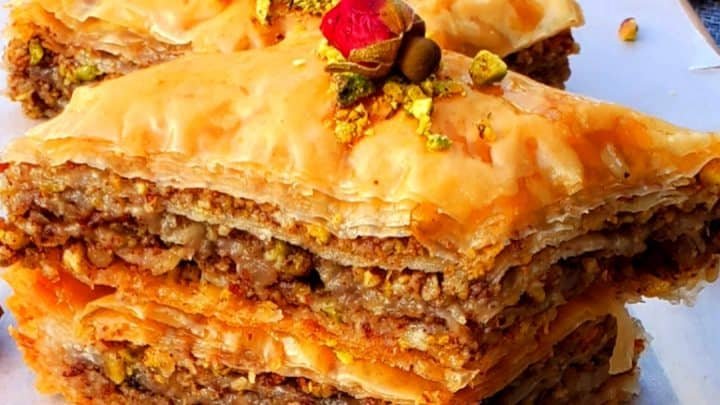
Welcome to ForknFood.com, your go-to destination for mouthwatering recipes from around the world. Today, we’re diving into the delightful world of Middle Eastern desserts with an easy baklava recipe that’s authentically Lebanese. Baklava, or baklawa as it’s often spelled in Lebanon, is a layered pastry that’s crispy, nutty, and soaked in a fragrant syrup. This version keeps things simple yet true to tradition, making it perfect for home cooks who want impressive results without spending hours in the kitchen. Whether you’re hosting a dinner party, celebrating a holiday, or just craving something sweet, this recipe will transport your taste buds to the bustling streets of Beirut.
In Lebanese cuisine, baklava stands out for its subtle flavors. Unlike Greek baklava, which often incorporates honey and spices like cinnamon or cloves, the Lebanese style focuses on the natural taste of nuts enhanced by a light syrup scented with orange blossom water or rose water. This creates a dessert that’s sweet but not overpowering, allowing the buttery phyllo layers and crunchy walnuts to shine. Historically, baklava has roots in the Ottoman Empire, but it has evolved uniquely in Lebanon, where it’s a staple at weddings, family gatherings, and religious festivals like Eid.
The History and Cultural Significance of Lebanese Baklava
Baklava’s origins are a bit of a culinary mystery, with claims from Turkey, Greece, and the Middle East. However, the Lebanese version we know today likely traces back to the 16th century during the Ottoman rule, when phyllo dough techniques were refined in imperial kitchens. In Lebanon, baklawa is more than just a treat—it’s a symbol of hospitality and celebration. Families pass down recipes through generations, often customizing them with local nuts like walnuts or pistachios sourced from the fertile Bekaa Valley.
What sets Lebanese baklava apart is its emphasis on purity. Traditional recipes avoid heavy spices, opting instead for flower waters to add an aromatic touch. This reflects Lebanon’s Mediterranean influences, where fresh, floral notes are prized in both savory and sweet dishes. In modern times, baklava has become a global favorite, but authentic Lebanese styles remain cherished for their balance of textures: flaky phyllo, crunchy nuts, and sticky syrup.
If you’re new to Lebanese cuisine, check out our internal guide on Lebanese Desserts Essentials for more inspiration. For external resources, the Maureen Abood blog offers deep dives into traditional methods.
Lebanese immigrants have spread this dessert worldwide, adapting it slightly but keeping core elements intact. In places like Dearborn, Michigan—home to a large Lebanese community—baklava shops thrive, serving versions that mirror those from Tripoli or Sidon. This cultural export highlights how food connects people across borders.
Ingredients for Easy Lebanese Baklava
To make this authentic yet easy baklava, you’ll need simple ingredients that are easy to find. This recipe serves about 24-30 pieces, depending on how you cut it. Prep time is around 20 minutes, baking takes 35-40 minutes, and you’ll want to let it cool for a few hours.
For the Syrup (Ater):
- 1 cup granulated sugar
- 1/2 cup water
- 1 tablespoon fresh lemon juice
- 1 teaspoon orange blossom water (or rose water for a variation)
For the Nut Filling:
- 3 cups raw walnuts (or a mix of walnuts and pistachios)
- 1/4 cup granulated sugar
- Optional: A pinch of ground cinnamon (though traditional Lebanese skips this for purity)
For the Assembly:
- 1 pound (about 40 sheets) phyllo dough, thawed (9×14 inch sheets work best)
- 3/4 cup clarified butter or ghee, melted (unsalted butter can be clarified at home)
Clarified butter is key here—it’s butter with the milk solids removed, preventing burning and adding a rich flavor. You can buy ghee from stores like Amazon or make it by melting butter and skimming off the foam.
For nut alternatives, pistachios add a green hue and milder taste, popular in fancier Lebanese versions. If you’re sourcing ingredients, visit our Middle Eastern Pantry Staples page for tips.
Step-by-Step Instructions
This easy method skips the tedious buttering of each phyllo layer. Instead, we assemble, cut, and pour the butter over— a genius hack from Lebanese home cooks that saves time without sacrificing authenticity.
- Prepare the Syrup: Start by making the syrup so it can cool completely. In a small saucepan, combine the sugar, water, and lemon juice. Bring to a boil over medium heat, stirring until the sugar dissolves. Reduce heat and simmer for 5-7 minutes until slightly thickened. Remove from heat, stir in the orange blossom water, and let it cool to room temperature. This floral syrup is what gives Lebanese baklava its signature aroma.
- Prep the Nuts: While the syrup cools, pulse the walnuts in a food processor until coarsely chopped—aim for a texture like coarse sand, not powder. Mix in the 1/4 cup sugar. Set aside. This step ensures the nuts stay crunchy after baking.
- Assemble the Layers: Preheat your oven to 350°F (175°C). Use a 9×13 inch baking pan (metal preferred for even browning). Unroll the phyllo dough and cover with a damp towel to prevent drying. Place half the sheets (about 20) in the pan, one by one, fitting them snugly. Spread the nut mixture evenly over the top. Then, layer the remaining phyllo sheets on top.
- Cut and Butter: Using a sharp knife, cut the assembled baklava into diamond shapes or squares. This pre-cutting allows the butter and syrup to penetrate. Pour the melted clarified butter evenly over the cuts, ensuring it seeps into every crevice.
- Bake: Place in the oven and bake for 35-40 minutes, or until golden brown and crispy. Rotate the pan halfway for even color.
- Soak in Syrup: As soon as it comes out of the oven, pour the cooled syrup over the hot baklava. It will sizzle and absorb beautifully. Let it sit at room temperature for at least 4 hours (overnight is best) to fully set.
This method yields flaky layers that are buttery and not soggy. For visual guides, see our Phyllo Dough Handling Tips.
Tips for Perfect Lebanese Baklava
- Phyllo Handling: Phyllo dries out fast, so work quickly and keep unused sheets covered. If it tears, no worries—patch it up; it won’t show after baking.
- Butter Quality: Clarify your own butter by melting and straining to remove solids. This prevents a greasy finish.
- Syrup Temperature: Always pour cold syrup on hot baklava for maximum absorption and crispiness.
- Storage: Store in an airtight container at room temperature for up to a week. It doesn’t need refrigeration, as the syrup preserves it.
- Common Mistakes: Don’t overfill with nuts, or it won’t hold together. Also, avoid over-baking to prevent dryness.
For more baking hacks, link to our Dessert Troubleshooting Guide.
Variations on the Classic
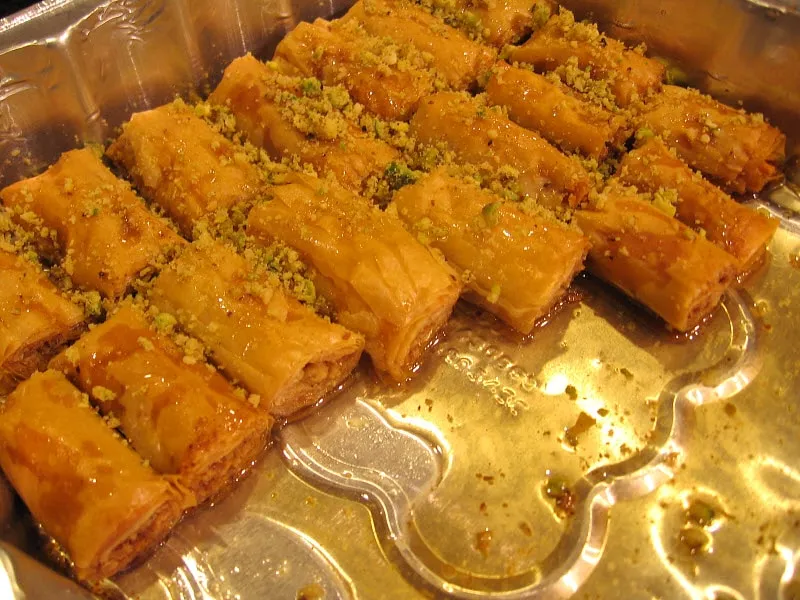
While walnuts are traditional, try pistachios for a vibrant green filling, or a mix for complexity. For finger-style baklava, roll the phyllo into cigars instead of layering in a pan. Vegan? Use plant-based butter and ensure your phyllo is egg-free.
In Lebanon, shapes vary—diamonds for elegance, squares for simplicity. Experiment with rose water instead of orange blossom for a different floral note.
Serving Suggestions and Pairings
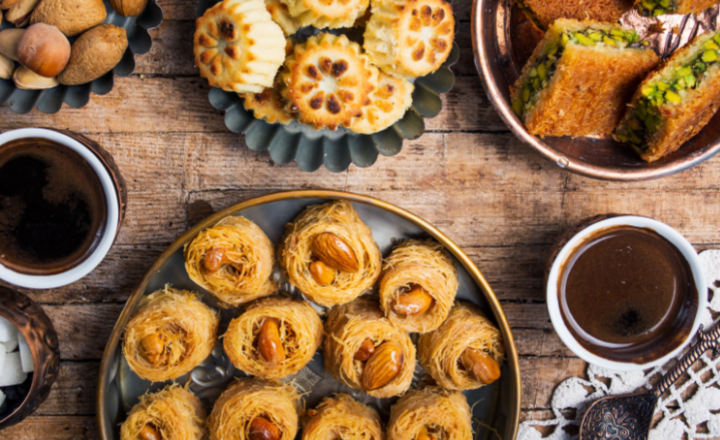
Serve baklava at room temperature with strong Arabic coffee or mint tea to cut the sweetness. It’s ideal for after-dinner treats or as gifts during holidays. Pair it with fresh fruits like figs or dates for a Lebanese-inspired platter.
Nutritionally, a piece (about 2×2 inches) has around 200 calories, mostly from nuts and butter—rich in healthy fats but enjoy in moderation.
Conclusion
This easy Lebanese baklava recipe brings authentic flavors to your kitchen with minimal effort. It’s a testament to how simple ingredients can create something extraordinary. At ForknFood.com, we love sharing recipes that connect cultures—try this one and let us know in the comments! For more, explore our https://forknfood.com/ Middle Eastern Recipes Collection or external sites like Feel Good Foodie.
FAQs: Common Questions About Easy Lebanese Baklava
Here are answers to some of the most frequently asked questions about making authentic Lebanese-style baklava at home. These tips come from traditional methods and home baker experiences to help you avoid common pitfalls.
1. What’s the difference between Lebanese baklava (baklawa) and Greek or Turkish versions?
Lebanese baklawa emphasizes floral aromas from orange blossom water or rose water in a light syrup, without heavy spices like cinnamon or cloves that are common in Greek (honey-based) or some Turkish styles. It focuses on the pure taste of nuts (often walnuts) and buttery, flaky layers for a balanced, not overly sweet result.
2. Why does my baklava turn soggy instead of staying crispy?
Soggy baklava often happens if the syrup is too hot when poured (use cooled syrup on hot baklava for better absorption and crispiness), if too much butter is used, or if it’s stored in a sealed container while warm (trapping moisture). Always let it cool completely at room temperature before covering loosely. Using clarified butter (ghee) helps prevent greasiness.
3. Can I make baklava ahead of time, and how do I store it?
Yes! Baklava is perfect for making in advance—it actually tastes better after 1-2 days as the flavors meld. Store in an airtight container at room temperature for up to 1-2 weeks (no refrigeration needed, as the syrup acts as a preservative). For longer storage, freeze individual pieces wrapped tightly for up to 3 months; thaw at room temperature.
4. How do I handle phyllo dough without it tearing or drying out?
Thaw frozen phyllo in the fridge overnight, then bring to room temperature for about 1-2 hours. Keep unused sheets covered with a damp (not wet) kitchen towel while working. If a sheet tears, patch it with another piece—no one will notice after baking and syrup soaking.
5. Can I freeze baklava before or after baking?
You can freeze unbaked assembled baklava (cut into pieces but not buttered yet) for up to 2 months; thaw in the fridge, then butter and bake. Baked baklava freezes well too—wrap tightly and thaw at room temperature. It reheats nicely in a low oven (300°F/150°C) for 10 minutes to crisp up.
6. What if I don’t have orange blossom water? Can I substitute?
Orange blossom water gives the authentic Lebanese floral note, but rose water works as a close substitute (use half the amount if it’s strong). In a pinch, a touch of vanilla extract can add aroma, though it’s not traditional. For best results, source pure flower waters.
7. Is clarified butter necessary, or can I use regular butter?
Clarified butter (or ghee) is ideal because it removes milk solids that can burn or make the baklava greasy/soggy. Regular melted butter works in a pinch but may not yield the same crisp texture. Clarify your own at home or buy ghee.
8. How finely should I chop the nuts?
Pulse in a food processor to a coarse sand-like texture—not too fine (powder) or too chunky. This ensures even distribution and a nice crunch without making the filling dense.
For more troubleshooting, check our internal guide on Dessert Troubleshooting Tips or explore Maureen Abood’s detailed Lebanese baklawa guide here.
Recommended Products for Making Authentic Lebanese Baklava
To get the best results with this easy recipe, here are some recommended products. Many are available in Karachi supermarkets (like Imtiaz, Chase, or Metro) or online via Daraz.pk, Ubuy Pakistan, or international sites with shipping to Pakistan.
- Phyllo Dough (Filo Pastry): Look for Athens or Kontos brands for thin, high-quality sheets that don’t tear easily—widely recommended for baklava. In Pakistan, frozen phyllo is available at larger stores or online (search “phyllo dough” on Daraz). A 1 lb (454g) pack with ~40 sheets is perfect for this recipe.
- Clarified Butter / Ghee: Use pure desi ghee for authentic flavor—widely available locally (brands like Nirala or homemade). If buying imported, look for brands like Amul or Patanjali ghee.
- Orange Blossom Water: Essential for the signature Lebanese aroma. Cortas or Yamama brands are popular and available online in Pakistan (e.g., Yamama 300ml on Daraz.pk for around Rs. 1,600, or Cortas via Ubuy Pakistan). Chiltan Pure or local floral waters are good alternatives.
- Rose Water (Alternative/Substitute): If orange blossom is unavailable, use Mawaiz or local brands—easy to find in Pakistani markets or online.
- Nuts (Walnuts or Pistachios): Raw walnuts from local dry fruit shops (e.g., Empress Market in Karachi) for freshness and affordability. For premium pistachios, Iranian or Afghan varieties are excellent.
- Other Essentials: A sharp chef’s knife for clean diamond cuts, a 9×13 inch metal baking pan (non-stick for even browning), and a food processor for quick nut chopping.
These products make the process smoother and more authentic. Shop local where possible for freshness!
If you try this recipe, share your photos or questions in the comments below—we love hearing from our ForknFood community! For more Lebanese-inspired treats, browse our Middle Eastern Recipes Collection.
Top Recommended Products for Making Authentic Lebanese Baklava
To achieve that perfect flaky, buttery, and aromatic Lebanese baklava, invest in quality staples. Here are the top picks loved by home bakers worldwide and accessible in Pakistan:
- Phyllo Dough (Filo Pastry) – Top Brands
The foundation of great baklava is thin, high-quality phyllo that doesn’t tear easily and bakes crisp. - Athens Phyllo Dough (16 oz / ~454g pack, ~40 sheets): Widely regarded as one of the best for baklava—consistent thickness, flaky results, and reliable. Many pros and home cooks swear by it for not drying out quickly. Available frozen in larger Karachi supermarkets (Imtiaz, Metro, or Gourmet) or online via Daraz.pk (search “Athens phyllo” or “filo sheets”). Price: ~Rs. 1,200–2,000.
- Kontos Phyllo Dough: Another top-tier brand (often ranked highest for ultra-thin #4 or #5 sheets ideal for layered baklava). Great for authentic texture; some Lebanese-style recipes prefer it. Check Daraz or import via Ubuy Pakistan.
- Local/Alternative Option: Generic or imported filo sheets on Daraz.pk (search “phyllo dough for baklava” or “filo sheets”)—brands like those from Kunafaty or similar suppliers offer frozen packs delivered nationwide. For shredded phyllo (kataifi) variations, look at Kunafaty Pakistan (Instagram: @kunafaty.pak) for super-fine options in Karachi/Lahore. Pro tip: Always thaw in the fridge overnight for best handling.
- Clarified Butter / Ghee – Essential for Crisp Layers
Clarified butter (or ghee) is the gold standard for baklava—it has a high smoke point, prevents burning, and adds rich flavor without milk solids making it soggy. - Cowgenic Desi Ghee or Anhaar Desi Ghee: Top Pakistani brands for pure, nutty cow’s milk ghee—highly recommended for authenticity and local freshness. Widely available at supermarkets, dry fruit shops (Empress Market in Karachi), or online. Price: ~Rs. 1,500–2,500 per kg.
- Nirala or Olper’s Ghee: Affordable, reliable alternatives found everywhere in Karachi.
- Global pick: Imported pure ghee brands if you want extra purity—available on Daraz or Ubuy. Many bakers clarify unsalted butter at home, but ready-made desi ghee saves time and gives excellent results.
- Orange Blossom Water – For Authentic Lebanese Aroma
This floral essence is non-negotiable for true Lebanese baklawa flavor. - Yamama Orange Blossom Water (300ml or 750ml): One of the most popular and highly rated in Pakistan—pure, fragrant, and perfect for syrup. Easily found on Daraz.pk (search “Yamama orange blossom water”) for ~Rs. 1,200–2,000. Great reviews for baking use.
- Cortas or Al Wadi Orange Blossom Water: Lebanese imports—top global choices for clean, intense flavor without artificial notes. Available via Ubuy Pakistan or specialty Middle Eastern stores in Karachi (Saddar or Clifton areas).
- Rabee or Sadaf Brands: Premium options if importing—excellent for baklava and other desserts. Start with 1 tsp in your syrup; a little goes a long way!
- Nuts – Walnuts or Pistachios
Fresh, raw nuts make all the difference for crunch. - Raw Walnuts: Buy premium Afghan or local walnuts from Empress Market or dry fruit shops in Karachi—affordable and fresh (~Rs. 1,000–1,500/kg).
- Pistachios: Iranian or local green pistachios for vibrant color and mild taste—top choice for fancier Lebanese variations.
- Tools & Extras for Easier Baklava Making
- 9×13 Inch Metal Baking Pan: Non-stick for even browning—widely available at home stores or Daraz (~Rs. 800–1,500).
- Food Processor: For quick, even nut chopping (any good brand like Philips or National).
- Sharp Chef’s Knife or Specialty Baklava Cutter: For clean diamond cuts—look for stainless steel pastry cutters on Daraz (~Rs. 500–1,000). Some imported baklava molds (stainless steel shapes) are popular on AliExpress or local sellers for uniform pieces.
- Simple Syrup Tools: A heavy-bottom saucepan for perfect syrup—no special kit needed!
These top products ensure restaurant-quality results at home. Shop local in Karachi for freshness (Empress Market, Imtiaz, or online Daraz for convenience). If you’re new to these, start with Yamama orange blossom and Athens/Cowgenic combo—they’re favorites for authentic Lebanese style.
Link internally to our Middle Eastern Pantry Staples for more shopping tips!
Leave a Reply