The Mediterranean diet isn’t just a fleeting trend; it’s a timeless way of eating inspired by the traditional foods of countries bordering the Mediterranean Sea, such as Greece, Italy, and Spain. This eating pattern emphasizes whole, plant-based foods, healthy fats, lean proteins, and mindful portions, making it accessible and sustainable for beginners. Unlike restrictive diets, it focuses on enjoyment, balance, and long-term health. If you’re new to this lifestyle, you’re in good company—it’s been ranked as the best overall diet by U.S. News & World Report for several years running.
What draws people to the Mediterranean diet? Its proven health benefits are a major factor. Research shows it can lower the risk of heart disease by improving cholesterol levels, blood pressure, and inflammation. It also supports healthy blood sugar management, reducing the chances of type 2 diabetes. Additionally, it promotes brain health, potentially decreasing the risk of cognitive decline and conditions like Alzheimer’s. Studies indicate better sleep quality, reduced cancer risk in some cases, and even enhanced mental well-being through nutrient-rich foods that combat oxidative stress. For those looking to maintain a healthy weight, it encourages natural portion control without calorie counting, leading to sustainable results.
At ForknFood.com, we’re passionate about making healthy eating approachable. If you’re curious about the basics, check out our internal guide on getting started with plant-based meals. Externally, the Mayo Clinic offers an excellent overview of the diet’s principles.
Understanding the Mediterranean Diet Pyramid
To visualize the diet, think of it as a pyramid where the base consists of everyday staples, and the top features occasional treats. At the foundation are fruits, vegetables, whole grains, beans, nuts, and olive oil—these should make up the bulk of your meals. Higher up, you’ll find fish and seafood a few times a week, with poultry, eggs, and dairy in moderation. Red meat and sweets are at the peak, enjoyed sparingly.
This structure promotes variety and nutrient density. Key foods include:
- Fruits and Vegetables: Aim for 7-10 servings daily. Think tomatoes, cucumbers, leafy greens, berries, and citrus.
- Whole Grains: Brown rice, quinoa, whole-wheat bread, and oats for fiber and sustained energy.
- Healthy Fats: Extra-virgin olive oil, avocados, nuts like almonds and walnuts.
- Proteins: Fish (salmon, sardines), legumes (chickpeas, lentils), and occasional poultry or eggs.
- Dairy: Greek yogurt and cheese in small amounts.
- Herbs and Spices: Garlic, basil, oregano for flavor without excess salt.
Avoid processed foods, sugary drinks, and refined grains. Hydration is key—water and herbal teas are staples, with moderate red wine optional for adults.
For more on food swaps, visit our https://forknfood.com/ healthy fats essentials page. Harvard Health provides a practical guide to adopting these habits.
Easy Recipes for Mediterranean Diet Beginners
Diving into recipes is the best way to start. These five beginner-friendly options use simple ingredients, require minimal prep, and highlight the diet’s fresh flavors. Each serves 2-4 and can be scaled. We’ve included nutritional perks to show how they align with Mediterranean principles.
1. Classic Greek Salad (Horiatiki)
This no-cook salad is a staple—refreshing, crunchy, and packed with antioxidants from veggies and heart-healthy olive oil.
Ingredients:
- 4 ripe tomatoes, chopped
- 1 cucumber, sliced
- 1 red onion, thinly sliced
- 1/2 cup Kalamata olives
- 4 oz feta cheese, crumbled
- 3 tbsp extra-virgin olive oil
- 1 tsp dried oregano
- Salt and pepper to taste
- Optional: Bell peppers or fresh herbs
Instructions:
- In a large bowl, combine tomatoes, cucumber, onion, and olives.
- Drizzle with olive oil, sprinkle oregano, salt, and pepper. Toss gently.
- Top with feta. Let sit 5 minutes for flavors to meld. Serve with whole-grain pita.
Prep Time: 10 minutes. Calories per serving: ~250. This recipe boosts hydration and provides vitamins C and K, supporting immune health.
For variations, try our internal twisted Greek salad recipe.
2. Grilled Lemon Herb Fish with Vegetables
Fish is a Mediterranean hero for omega-3s, which reduce inflammation and support heart health. This one-pan meal is effortless.
Ingredients:
- 2 white fish fillets (like cod or tilapia, 6 oz each)
- 2 zucchini, sliced
- 1 bell pepper, chopped
- 2 tbsp olive oil
- Juice of 1 lemon
- 2 garlic cloves, minced
- 1 tsp each: oregano, thyme
- Salt and pepper
Instructions:
- Preheat grill or oven to 400°F.
- Mix oil, lemon juice, garlic, herbs, salt, and pepper.
- Toss veggies in half the mixture; marinate fish in the rest for 10 minutes.
- Grill or bake fish and veggies 10-12 minutes until fish flakes easily.
Prep Time: 15 minutes + marinating. Calories per serving: ~300. Rich in protein and fiber, it aids weight management.
Pair with our olive oil guide. For more fish ideas, see EatingWell’s suggestions.
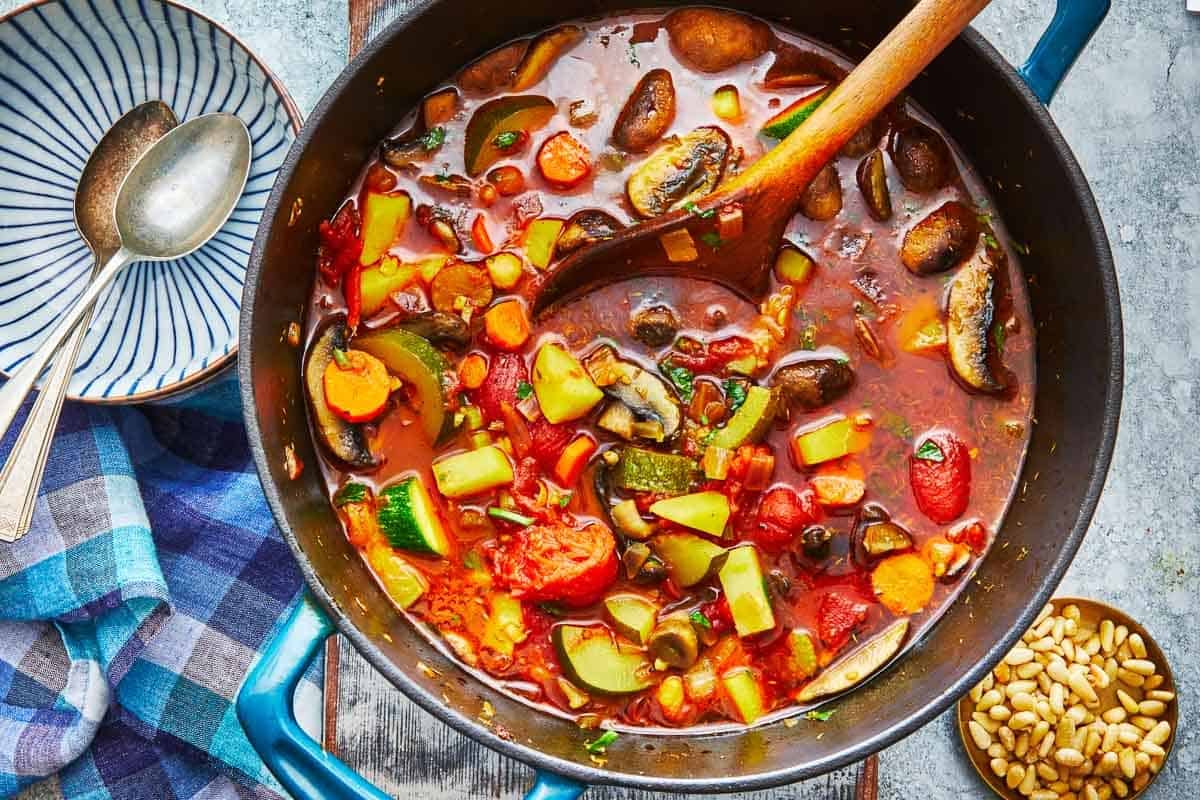
3. Chickpea and Spinach Stew
A vegetarian delight using legumes for plant-based protein. It’s hearty, anti-inflammatory, and budget-friendly.
Ingredients:
- 1 can (15 oz) chickpeas, drained
- 4 cups fresh spinach
- 1 onion, diced
- 2 garlic cloves, minced
- 1 can (14 oz) diced tomatoes
- 2 tbsp olive oil
- 1 tsp cumin, paprika
- Salt and pepper
- Optional: Feta for topping
Instructions:
- Heat oil in a pot; sauté onion and garlic 5 minutes.
- Add spices, tomatoes, and chickpeas. Simmer 10 minutes.
- Stir in spinach until wilted. Adjust seasoning.
Prep Time: 20 minutes. Calories per serving: ~350. High in iron and folate, it supports energy levels.
Explore our legume recipes collection. The Mediterranean Dish has similar stews.
4. Whole Grain Pasta with Pesto and Cherry Tomatoes
Swap refined pasta for whole grain to add fiber. This quick dish uses basil for fresh, antioxidant-rich flavor.
Ingredients:
- 8 oz whole wheat pasta
- 2 cups cherry tomatoes, halved
- 1/4 cup pesto (store-bought or homemade: basil, pine nuts, olive oil, garlic, Parmesan)
- 2 tbsp olive oil
- Salt and pepper
- Optional: Grilled chicken or shrimp
Instructions:
- Cook pasta per package; drain.
- Sauté tomatoes in oil 5 minutes.
- Toss pasta with pesto and tomatoes. Season.
Prep Time: 15 minutes. Calories per serving: ~400. Provides complex carbs for steady energy.
For pesto tips, check our herb basics. Allrecipes offers Mediterranean pasta ideas.
5. Greek Yogurt Parfait with Nuts and Fruit
A sweet yet healthy dessert or breakfast. Yogurt supports gut health with probiotics.
Ingredients:
- 2 cups plain Greek yogurt
- 1 cup mixed berries
- 1/4 cup chopped nuts (almonds, walnuts)
- 1 tbsp honey
- Cinnamon to taste
Instructions:
- Layer yogurt, berries, and nuts in glasses.
- Drizzle honey and sprinkle cinnamon.
Prep Time: 5 minutes. Calories per serving: ~200. Aids digestion and provides healthy fats.
See our yogurt recipes. Healthline discusses yogurt benefits.
These recipes total under 30 minutes each, using pantry staples. For a 7-day meal plan, reference our beginner plans or Cleveland Clinic’s examples.
Tips for Beginners on the Mediterranean Diet
Starting out? Ease in gradually. Stock your kitchen with essentials like olive oil, canned beans, and frozen veggies. Meal prep salads or grains ahead. Eat mindfully—share meals with family for the social aspect, a key diet pillar.
Track progress without obsession; focus on how you feel. Challenges? Swap butter for olive oil or add fish twice weekly. For sustainability, incorporate movement like walking, as traditional Mediterranean lifestyles do.
Resources: Our shopping lists. Johns Hopkins Medicine shares easy swaps.
Conclusion
Embracing the Mediterranean diet as a beginner opens doors to flavorful, nourishing meals that benefit your body and mind. From vibrant salads to simple stews, these recipes prove healthy eating can be delicious and straightforward. Start small, experiment, and enjoy the journey toward better health.
At ForknFood.com, we’re here to support you—explore more recipes or join our community. For in-depth science, visit PMC’s review on diet benefits.
The Mediterranean diet is a flavorful, sustainable way of eating that prioritizes whole foods, healthy fats, and balance. To help beginners on forknfood.com, here are some Frequently Asked Questions (FAQs) addressing common concerns, followed by recommended products and kitchen essentials to make adopting this lifestyle easier.
Mediterranean Diet FAQs for Beginners
These FAQs draw from common questions asked by newcomers, helping clear up misconceptions and provide practical guidance.
1. What exactly is the Mediterranean diet, and is it a strict plan?
No, it’s not a rigid “diet” with calorie counting or forbidden foods—it’s a flexible lifestyle pattern inspired by traditional eating in countries like Greece, Italy, and Spain. Focus on plant-based foods (fruits, vegetables, whole grains, legumes), healthy fats (especially extra-virgin olive oil), fish, moderate dairy and poultry, and limited red meat and sweets. The key is enjoyment, variety, and moderation rather than elimination.
2. Can I lose weight on the Mediterranean diet?
Yes, many people do, often sustainably without feeling deprived. It promotes natural portion control through fiber-rich foods and healthy fats that keep you full. Pair it with mindful eating and activity for best results. It’s more about long-term health than rapid weight loss.
3. How much olive oil should I use daily?
Olive oil is central—aim for 3-4 tablespoons per day (or more) as your main fat source for cooking, dressings, and drizzling. Use extra-virgin olive oil (EVOO) for its antioxidants and heart benefits. It’s generous, not skimpy!
4. Do I have to eat fish every day?
No—aim for fish or seafood 2-3 times per week, especially fatty varieties like salmon or sardines for omega-3s. Legumes (beans, lentils, chickpeas) provide most protein on other days, with poultry or eggs occasionally.
5. Is red wine required, and how much?
Moderate red wine (1 glass per day for women, up to 2 for men) is traditional and may offer heart benefits due to antioxidants, but it’s optional. If you don’t drink, skip it—focus on water, herbal teas, or infused water instead.
6. What if I’m vegetarian or vegan?
It’s highly adaptable! Emphasize legumes, nuts, seeds, whole grains, and veggies. Many Mediterranean dishes are naturally plant-based. Swap fish for more beans or tofu if needed.
7. How do I start without overhauling everything?
Begin small: Swap butter for olive oil, add more veggies to meals, try fish once or twice a week, and stock pantry staples. Meal prep salads or grains ahead. Consult a doctor or dietitian if you have health conditions.
8. Are there any foods to avoid completely?
Limit processed foods, sugary drinks, refined grains, and excessive red/processed meats. It’s about reducing, not banning—enjoy treats occasionally.
9. How long until I see benefits?
Many notice improved energy and digestion within weeks, with heart health and inflammation benefits building over months. Consistency matters more than perfection.
10. Is it expensive?
Not necessarily—focus on seasonal produce, canned beans/fish, and bulk grains. Quality olive oil is an investment, but a little goes far.
For more in-depth answers, explore our internal guide on common Mediterranean diet myths. The Cleveland Clinic also offers reliable insights on getting started.
Recommended Products and Kitchen Essentials for the Mediterranean Diet
Stocking up on the right items makes cooking Mediterranean-style effortless and enjoyable. Prioritize quality staples that support flavor and health.
Pantry Essentials
- Extra-Virgin Olive Oil (EVOO): The cornerstone—use it for everything. Look for high-quality, single-origin options like California Olive Ranch Everyday EVOO or Greek varieties for robust flavor.
Shop similar bundles at sites like The Mediterranean Dish for variety packs. - Legumes: Canned or dried chickpeas, lentils, and beans—no-salt-added preferred.
- Whole Grains: Quinoa, brown rice, whole-wheat pasta, oats, and barley.
- Nuts and Seeds: Almonds, walnuts, pistachios (unsalted or lightly salted).
- Canned Tomatoes and Olives: For sauces, stews, and salads—Kalamata olives add authentic taste.
- Herbs and Spices: Dried oregano, basil, thyme, cumin, paprika, garlic powder—fresh herbs when possible.
- Other: Balsamic vinegar, tahini, honey (for occasional sweetness).
Fresh and Perishable Staples
- Fruits and vegetables (fresh or frozen): Tomatoes, cucumbers, spinach, berries, citrus.
- Greek yogurt (plain, full-fat or low-fat).
- Feta or other cheeses in moderation.
- Fish/seafood: Fresh or frozen salmon, sardines.
Kitchen Tools and Cookware
Invest in pieces that handle olive oil well and support simple, healthy cooking:
- Nonstick or Stainless Steel Frying Pan/Sauté Pan: Great for veggies and fish—brands like Caraway ceramic or Made In stainless clad preserve flavors without excess oil.
- Grill Pan or Griddle: For that charred Mediterranean touch—Lodge cast iron reversible grill/griddle is versatile.
- Saucepan or Saucier: Ideal for grains, stews, and sauces.
- Baking Sheet: For roasting veggies—half-sheet size works well.
- Basic Tools: Sharp chef’s knife, cutting board, salad spinner, and measuring spoons for portioning olive oil.
These tools make prep quick—many are lifetime investments. For cookware ideas, check Made In’s Mediterranean essentials.
At ForknFood.com, we recommend starting with a simple pantry refresh. Browse our Mediterranean shopping list for a printable version. Sites like Brightland or GRAZA offer premium olive oils to elevate your meals.
Here are some other related top products to enhance your Mediterranean diet journey on forknfood.com. Building on the pantry essentials, cookware, and staples we covered earlier, these popular recommendations focus on high-quality olive oils (the absolute cornerstone), premium spices/herbs, must-have cookware upgrades, helpful tools, and even supportive books or accessories. These picks are based on current favorites from dietitians, home cooks, and Mediterranean-focused sources in 2025-2026.
Top Recommended Extra-Virgin Olive Oils (EVOO)
Olive oil is non-negotiable—aim for extra-virgin, cold-pressed varieties with low acidity and high polyphenols for maximum health benefits like heart protection and anti-inflammatory effects. Use it generously for drizzling, cooking, and dressings.
- California Olive Ranch Everyday Extra Virgin Olive Oil — A versatile, mild-flavored staple that’s widely praised as the best overall for everyday use. Affordable, reliable, and great for beginners.
- Graza Drizzle & Sizzle Set — Comes in “Drizzle” (fruity for finishing) and “Sizzle” (robust for cooking). High in polyphenols, sourced from Spain—perfect for authentic Mediterranean flavor.
- Kosterina Early Harvest Greek Olive Oil — Made from Koroneiki olives in Greece; ultra-premium, nutrient-dense, and ideal for salads or dipping.
- Brightland Olive Oils — Artisan options like their Awake or Alive varieties; focused on high-quality, single-origin EVOO with bold taste profiles.
Stock up on a larger bottle for cooking and a smaller one for finishing. For more options, check The Mediterranean Dish’s shop selections or our internal olive oil guide.
Premium Spices and Herb Blends
Flavor without salt is key—stock these for authentic tastes in recipes like Greek salads or chickpea stews.
- The Mediterranean Dish Spice Blends — All-natural mixes like Greek seasoning, za’atar, or Italian herbs; chef-curated and salt-free options available.
- Dried Oregano, Thyme, and Basil Packs — Look for high-quality Greek or Italian imports for that fresh, aromatic punch.
These elevate simple dishes instantly. Pair with our herb basics page.
Upgraded Cookware for Mediterranean-Style Cooking
Mediterranean meals involve lots of sautéing veggies, simmering stews, grilling fish, and roasting—non-reactive, even-heating pans shine here.
- Made In Stainless Clad Frying Pan (12-inch) — Durable, versatile for veggies and fish; enhances delicate olive oil flavors without reacting.
- Made In Carbon Steel Frying Pan — Great for achieving that charred, open-flame-like sear on veggies or fish—traditional Mediterranean essence.
- Lodge Cast Iron Grill/Griddle — Reversible for indoor grilling; perfect for fish, veggies, or flatbreads like pita.
- Caraway Ceramic Nonstick Sauté Pan — Easy cleanup for quick meals; non-toxic and great for lighter cooking.
These are investments that last—many are induction-compatible and oven-safe. For a full set, see Made In’s Mediterranean essentials or our kitchen tools roundup.
(Visual of a sizzling pan with grilled veggies and fish—mouthwatering!)
Other Helpful Tools and Accessories
- High-Quality Blender or Food Processor — Essential for homemade hummus, pesto, or smoothies with berries and yogurt.
- Salad Spinner — Keeps greens crisp for daily big salads.
- Glass Storage Containers — For meal prepping grains, stews, or chopped veggies.
Supportive Books for Beginners
- The Complete Mediterranean Cookbook by America’s Test Kitchen — Over 500 tested recipes, tips on ingredients, and nutritional info—highly recommended for reliable, family-friendly meals.
- Mediterranean Diet Cookbook for Beginners 2025 Editions — Fresh updates with meal plans, 2000+ days of recipes, and easy nutritional breakdowns.
These books pair perfectly with our recipes—browse more on Amazon or check our recommended reads.
Incorporating these top products will make your Mediterranean meals even more enjoyable and authentic. Start with one or two upgrades, like a great EVOO and a solid pan, and build from there. Head to ForknFood.com for our updated Mediterranean shopping list or community tips—what’s your must-have item?



Leave a Reply